 18:12
AI vs. Human Writing: Can an Editor Tell the Difference?
10K views · 4mo ago · 18:12
Love my channel? Treat me to a cup of coffee at My Published Stories My Poetry Collection Bluesky

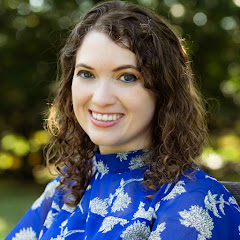
Hi there! My name is Diane Callahan. I'm a developmental editor and writer of fiction, nonfiction, and poetry. This channel is dedicated to providing practic…
18:1210K views · 4mo ago · 18:12
Love my channel? Treat me to a cup of coffee at My Published Stories My Poetry Collection Bluesky
 21:51
14K views · 7mo ago · 21:51
Narrative voice is emotion coming through on the page—it’s passion, it’s opinion, it’s personality. Importantly, narrative voice can change depending on the story’s tone and the character’s perspective. Partially a deliberate choice by the author and partially subconscious, voice is an accumulation of what we read and watch, the culture we grew up in, the people we know, and our attitudes about the world.
 1:16:35
1.9K views · 10mo ago · 1:16:35
Guest: K.C. Norton
What will be the big book market trends in 2026? Why are somany people gravitating toward horror and cozy fantasy? And what can we do about declining literacy rates? I discuss all these questions and more with author and bibliophile K.C. Norton, who made it her goal to read ONE THOUSAND books this past year.
 18:43
6.4K views · 1y ago · 18:43
Guest: Miyazaki's Storytelling Advice
Quiet moments can hit harder than action scenes, as Hayao Miyazaki explains in an interview with film critic Roger Ebert: “If you just have non-stop action with no breathing space at all, it’s just busyness.” In this video, I share my favorite moments of “intentional emptiness” from literature, with examples from Haruki Murakami, Jeff VanderMeer, Claire Keegan, and John le Carré.
 14:25
8.6K views · 1y ago · 14:25
A subplot is “a secondary plot string that runs parallel to the main plot,” as ScreenCraft puts it. I invited fellow editor, book coach, and YouTuber Leslie “XPLovecat” Horn to deliver our best tips for threading together subplots. We cover the purpose of subplots, different types in popular novels, and solutions to common problems you might encounter while writing them.
 21:40
3.3K views · 1y ago · 21:40
This episode is a companion piece to my video on Fantasy and Sci-Fi Worldbuilding Fundamentals, with even more tips and answers to your questions! How do you avoid "infodumping"? What's the best way to differentiate fictional cultures and subcultures? How do you know where to start and stop worldbuilding?
 24:42
17K views · 1y ago · 24:42
These fantasy and sci-fi worldbuilding fundamentals can act as the foundation of your story so you can start writing sooner rather than later. While there’s value in planning and researching your world in advance, it’s easy to wander so far into the depths of worldbuilding waters that you lose sight of the story’s shore.
 17:53
8.6K views · 2y ago · 17:53
How do you prevent characters from being clones of yourself? How do you differentiate characters from each other? And how do you ensure your protagonist isn’t carrying the “idiot ball”? Diane Callahan draws on her experiences as a writer and editor to share advice on these questions and more!
 15:26
11K views · 2y ago · 15:26
What’s the most engaging way to start a story? How do you approach returning to an old project? Diane Callahan draws on her experiences as a writer and editor to share advice on these questions and more! Music: "Clockwork, part 2" by Vindsvept
 14:37
34K views · 2y ago · 14:37
Countless elements contribute to great storytelling, but one in particular will strengthen your story’s potency on a character, plot, scene, and sentence level. In this video, I dive into my personal theory for creating memorable stories, with examples from popular novels.
 31:34
16K views · 3y ago · 31:34
Guest: Curio Fiction
Curio fiction as a subgenre places the fantastic alongside the mundane, yet the story’s speculative elements feel subtle compared to other works classified as fantasy or science fiction. What all curio stories have in common is that they explore human relationships and daily life through the lens of an often-singular or anomalous speculative element.
 35:11
143K views · 3y ago · 35:11
Many writers dread writing descriptions. It’s difficult to know what to include, and it requires a lot of mental energy to summon interesting details from one’s imagination. Description can involve the setting, an object, a character, actions, and even internal thoughts. It might entail an artfully placed sentence dancing between dialogue; a paragraph that grounds the reader in the scene; or pages of prose that sink deep into a particular subject.
📚 Books mentioned: Buy the book · Buy the book · Buy the book · Buy the book
 16:39
41K views · 4y ago · 16:39
Folktales ignite our imaginations and reveal facets of human nature. In any story, writers design challenges that force their characters to confront their worst fears and insecurities. Here, you’ll find a folktale-inspired writing exercise wherein you can craft a story around a character’s flaws and an event or mystical being that challenges that flaw.
 33:34
75K views · 4y ago · 33:34
Incorrectly punctuated dialogue is one of the most frequent mistakes I see in manuscripts from writers who are just starting out. Luckily, you can master this skill with practice and patience. In this crash course, I’ll cover the difference between dialogue tags and action beats, where to shove your commas, what types of verbs to use, and the various kinds of punctuation that might appear in dialogue.
 22:58
66K views · 4y ago · 22:58
Guest: Alexa Donne
What makes a novel a thriller? What differentiates it from mystery or suspense? I discussed these questions and more with fellow YouTuber Alexa Donne, who’s a thriller connoisseur and author. We cowrote this video of six tips for writing better thriller novels, from designing killer endings and plot twists to exploring the darker side of humanity through complex characters and themes.
📚 Books mentioned: Buy the book · Buy the book · Buy the book
Showing the 15 most recent episodes. Everything plays right here on Pod Atlas.
Have thoughts about Diane Callahan - Quotidian Writer? Share them with other listeners.
Discuss this podcast