Ego (buddhism podcast)

Ego (buddhism podcast)

@buddhismpodcastenglish · 68K subscribers · 666 videos · Japanese

Ego (Buddhism Podcast) – your peaceful space to explore the timeless wisdom of the Buddha. We bring you inspiring Dhamma talks, guided meditations, and deep …

Episodes

50:28

No Desire. No Anger. And Still Not Free. Buddhism's Two Hidden Stages.

3K views · 1mo ago · 50:28

The non-returner has no sensual desire and no ill-will — permanently, completely gone. And is not yet an Arahant. Five higher fetters remain: passion for form (rūpa-rāga), passion for formlessness (arūpa-rāga), conceit (māna), restlessness (uddhacca), and ignorance (avijjā). Tonight: what those five actually mean — and why avijjā at this stage is not a small remaining problem but the deepest root of all.

Topics: Beyond the Obvious: The Third Stage · Mapping the Ten Fetters · The Reality of Sensory Experience · The Once-Returner: A Precise Definition · The Third Stage: Ending the Lower Fetters · Inside the Mind of a Non-Returner

47:27

Why You Love the Way You Do — And What Buddhism Says About It

2K views · 1mo ago · 47:27

Attachment Theory says move toward secure attachment — connection that is reliable, mutual, non-anxious. Buddhism says all clinging (upādāna) is the fuel of suffering. These sound like they are prescribing opposite things. Tonight: why they are not — and what the distinction reveals about how we love.

Topics: The Anatomy of Relational Patterns · John Bowlby and the Secure Base · Decoding Attachment Textures · The Buddhist Perspective on Clinging · The Teaching of Two Arrows · Redefining Secure Attachment

52:44

Buddhism's Most Avoided Teaching — And Why It Changes Everything

34K views · 2mo ago · 52:44

Guest: Buddhism's Most Avoided Teaching

Western Buddhism has quietly set aside one of the Buddha's central teachings: rebirth. The consequence is rarely named — without rebirth, the Four Noble Truths become smaller. NT1 becomes "this life contains suffering" rather than "the entire round of existence is suffering." NT3 becomes "this suffering can be managed" rather than "the round itself can stop."

48:11

A Philosopher Found a Joy That Nothing Could Take. The Buddha Found Something Else.

6.3K views · 2mo ago · 48:11

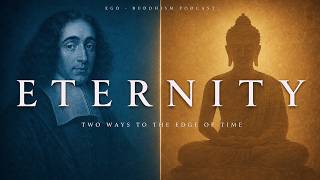
There is a mode of seeing that most of us have glimpsed briefly — where the ordinary anxious quality of experience falls away and what seemed fragile appears as part of something larger. Baruch Spinoza — excommunicated at 23, grinding lenses for a living — argued that this glimpse can be reached not by accident but by understanding. When the mind sees things under the aspect of eternity (sub specie aeternitatis), a joy arises that is not dependent on anything contingent.

Topics: A Forgotten Mode of Seeing · The Excommunicated Philosopher · Subspecies Aeternitatus Explained · The Interior Weather of the Mind · The Buddhist Parallel · The Crucial Divergence

47:49

You Can Understand Not-Self for Years. Stream-Entry Is Something Else.

7.1K views · 2mo ago · 47:49

Stream-entry (sotāpatti) is not Buddhist enlightenment. It is the first of four stages of awakening — the moment three fetters are permanently cut and the direction becomes irreversible. The Canon describes it through Kondañña: whatever is subject to origination is all subject to cessation. The Dhamma-eye opens. The question is no longer whether. The question is when.

Topics: The First Teaching at Isipatana · What is Stream Entry? · The Four Stages of the Path · The Four Stages Where Stream Entry Sits · The Three Fetters Cut · The Dhamma Eye: Seeing vs Understanding

49:41

Greed. Aversion. Delusion. What the Buddha Actually Called Them.

2.1K views · 2mo ago · 49:41

Greed, aversion, delusion — the three unwholesome roots (tīṇi akusalamūlāni). Not character flaws. Not sins. Mental phenomena with recognizable textures and identifiable arising conditions. The Mūla Sutta (AN 3:69): whatever unskillful qualities there are, all of them have greed, hatred, or delusion as their root.

47:13

A Slave Found a Freedom No Master Could Touch. The Buddha Went One Step Further

1.5K views · 2mo ago · 47:13

Epictetus was a slave who built a philosophy of freedom on one distinction: some things are in our power, some are not. His Enchiridion §9: "Disease is an impediment to the body, but not to the will." The Buddha, to an aging, ailing householder: "Even though I may be afflicted in body, my mind will be unafflicted." Same starting point. Different ending.

51:25

The Buddha's Word for What You're Clinging To

2.1K views · 2mo ago · 51:25

The First Noble Truth uses a precise word: not "the five aggregates are stressful" — the five CLINGING-aggregates. The upādāna (clinging) is inside the Buddha's own formulation. Tonight: what that clinging is, why it gives every defilement somewhere to root, and how clear seeing releases the grip.

Showing the 15 most recent episodes. Everything plays right here on Pod Atlas.

Have thoughts about Ego (buddhism podcast)? Share them with other listeners.

Discuss this podcast

More Religion & Spirituality podcasts

← Back to all podcasts