Love & Philosophy with Andrea Hiott

Love & Philosophy with Andrea Hiott

@waymaking23 · 95K subscribers · 360 videos · English

What's beyond either/or? Holding paradox. Constellatory cognition. Care. Getting intimate with what matters. Friction-friendly channel exploring the way-maki…

Episodes

1:19:37

#99 Persona Fog, Passion, Estrangement, Endurance, and Jung with Patricia Martin

306 views · 3w ago · 1:19:37

Guest: Patricia Martin

Andrea Hiott talks with cultural researcher Patricia Martin about her book Will the Future Like You?: Reflections on the Age of Hyper-Reinvention and the condition she calls persona fog. By now we know that online life, with its endless content, algorithmic polarization, and pressure to present oneself publicly, is detrimental to our well-being; countless books and articles have dissected these angles.
1:34:55

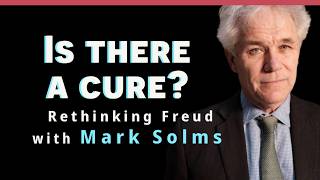
Is there a Cure? Rethinking Freud, chemical imbalances, & talk therapy as bodily with Mark Solms

1.5K views · 3w ago · 1:34:55

Guest: Mark Solms

Mark Solms began translating Freud’s neuroscientific writings in the late 1980s, then gave twenty-nine years to revising the translation of Freud’s psychological works.

Topics: Welcome and Guest Intro · Freud Translator Journey · Why Call It Cure · Reframing Freud Today · Freud as Neuroscientist · Memory Systems and Unconscious

📚 Books mentioned: Buy the book · Buy the book

1:39:27

#98 John Vervaeke on Love, Attention and Meaning with Darius Parvizi Wayne (and Iris Murdoch)

246 views · 1mo ago · 1:39:27

Guest: Darius Parvizi Wayne

This is a coversation between John Vervaeke ( and Darius Parvizi-Wayne ( introduced by Andrea Hiott. On Love, Attention, and the Good: Cognitive scientist John Vervaeke ( (University of Toronto) and philosopher Darius Parvizi-Wayne (Macquarie University) talk about love as a way of paying attention, starting from Iris Murdoch’s The Sovereignty of Good.

Topics: Darius and John introduce themselves · “Falling in love with being again” · Love as volitional necessity · Murdoch’s The Sovereignty of Good · The M and D example · Can cognitive science explain loving attention?

1:39:28

Falling in Love with Being Again with John Vervaeke & Darius Parvizi-Wayne (and Iris Murdoch)

3.7K views · 1mo ago · 1:39:28

Guests: Being Again, John Vervaeke

On Attention & Meaning A conversation on Love & Philosophy between John Vervaeke ( and Darius Parvizi-Wayne ( on love, mentorship, and intergenerational tradition, framed by a story about planting carob trees and the Philosopher’s Way in Heidelberg.

Topics: Welcome and Mentors · Philosophers Way Prelude · Meet Darius Parvizi-Wayne · John Vervaeke Background · Love and Meaning Crisis · Care Relevance and Frankfurt

2:00:32

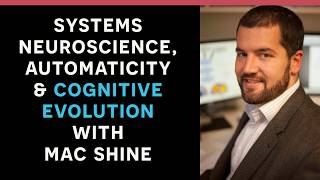
Cognitive evolution with Neuroscientist Mac Shine: Brain Dynamics and Delegation to Automaticity

1.1K views · 1mo ago · 2:00:32

Guest: Neuroscientist Mac Shine

Read the paper Andrea & Mac discuss at Neuroscientist Mac Shine explains systems neuroscience as an effort to reconcile single-neuron explanations with whole-brain network accounts by scaling recordings and adding biological constraints to imaging-based narratives.

Topics: Meet Mac Shine · Why Automaticity Matters · What Is Systems Neuroscience · Mac’s Path Into Systems Thinking · The Language Gap in Neuroscience · Are We Assuming What We Seek

1:03:16

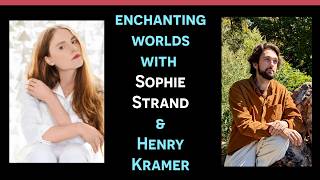
Sophie Strand & Henry Kramer on Imaginal Empathy, Consciousness, and Re-Enchantment

2.1K views · 1mo ago · 1:03:16

Henry Kramer is a scholar, educator, and artist exploring wonder, imagination, and our relationship with the more-than-human world. Henry teaches in the Program in Religion at CUNY Hunter and is Academic Dean of the Strother School of Radical Attention, where his Radical Imagination course was featured on the New York Times’ Hard Fork. Henry is also a ritual and immersive theater designer, songwriter, storyteller, and (most recently) a bit of a puppeteer.

Topics: Andrea Sets the Stage · Meet Host Henry · Why This Episode Matters · Henry Introduces Sophie · Sophie on Being a Lover · Re Enchantment and Mind

1:05:12

#97 Sophie Strand & Henry Kramer on Imaginal Empathy, Consciousness, and Re-Enchantment

363 views · 1mo ago · 1:05:12

Sophie and Henry explore consciousness, mind, and the porous boundary between inner and outer experience. The conversation ranges from panpsychism and animism to imaginal empathy, ecology, myth, and why modern life makes it so hard to stay open to mystery.

Topics: Andrea Sets the Stage · Meet Host Henry · Why This Episode Matters · Henry Introduces Sophie · Sophie on Being a Lover · Re Enchantment and Mind

1:31:31

Action without Attachment, Constellating different Dualisms, and Conversations as Care

1.4K views · 1mo ago · 1:31:31

Keya Maitra is the Lenney Distinguished Professor of Philosophy at the University of Hawai’i Mānoa. Keya joins Andrea to talk about her Philosophy of the Bhagavad Gita—not as a religious relic but as a living philosophical conversation. They move from action without attachment and yoga as a redirection of attention, to why the Gita’s dualism isn’t the mind-body split we know from Descartes, to how holding tension (rather than dissolving it) opens an expanding circle of care.

2:08:20

#96 Systems Neuroscience and Why Automaticity Matters for Cognitive Evolution with Mac Shine

274 views · 1mo ago · 2:08:20

Guest: Mac Shine

The Brain Inspired conversation Andrea mentions ( . Mac Shine on Systems Neuroscience, Automaticity, and the Cerebellum’s Role in Human Cognition. In discussion with Andrea Hiott. University of Sydney systems neuroscientist Mac Shine in conversation about systems neuroscience and the challenge of linking single-neuron explanations with whole-brain network accounts.

Topics: Welcome and Guest Intro · Automaticity and Evolution Teaser · Why This Conversation Matters · What Is Systems Neuroscience · Mac’s Path Into Systems Thinking · Language Gaps Across Fields

55:11

Hasok Chang on Inventing Temperature, Operational Coherence & the active understanding of knowledge

2.1K views · 2mo ago · 55:11

Guest: Hasok Chang

Research conversation (towards navigational mind) with Hasok Chang. Hasok Chang is the Hans Rausing Professor of History and Philosophy of Science and a Fellow of the British Academy, working on the history and philosophy of chemistry and physics, philosophy of scientific practice, realism, pluralism, and pragmatism.

1:07:32

#95 Inventing Temperature, Operational Coherence, Activist Realism and Active Knowledge with Camb...

173 views · 2mo ago · 1:07:32

Philosopher of science Hasok Chang (University of Cambridge) joins Andrea Hiott to trace the through-line of his work — from Inventing Temperature (2004), through Is Water H2O? (2012), to Realism for Realistic People (2022) — and to think together about what it means to treat knowledge as something we do rather than something we merely possess.

1:31:59

#94 Action without Attachment, Conversational Care, and the Bhagavad Gita with philosopher and pr...

316 views · 2mo ago · 1:31:59

Keya Maitra ( is the Lenney Distinguished Professor of Philosophy at the University of Hawai'i Mānoa. Keya joins Andrea to talk about her Philosophy of the Bhagavad Gita. They discuss this text as a living philosophical conversation. They move from action without attachment and yoga as a redirection of attention, to why the Gita's dualism isn't the mind-body split we know from Descartes, to how holding tension (rather than dissolving it) opens an expanding circle of care.

📚 Book mentioned: Buy the book

1:44:12

Molyneux's Problem and Reconsidering Perceptual Divides with Janet Levin and Brian Glenney

1K views · 2mo ago · 1:44:12

Guest: Janet Levin

Full show notes at An Irish scientist named William Molyneux sent philosopher John Locke a letter in 1688. That letter had a question in it that people are still talking about today. Suppose a person is born blind and has learned by touch to tell a cube from a sphere. If a surgery gives that person sight, and the two objects are set on the table in front of him, could that person tell, just by looking alone, which is the sphere and which is the cube?

Topics: Why a navigational approach to mind keeps running into this question · Janet reads Locke’s own statement of the question, and his answer · The 1688 letter Locke never answered, and the 1693 one he did · Molyneux, Dioptrica Nova, and the attempt to give empiricism experimental oomph · Why Locke buried the question in a passage about perceptual learning · Common sensibles: what touch and sight might share

Showing the 15 most recent episodes. Everything plays right here on Pod Atlas.

Have thoughts about Love & Philosophy with Andrea Hiott? Share them with other listeners.

Discuss this podcast

More Philosophy & Social Science podcasts

← Back to all podcasts