Sean Carroll

Sean Carroll

@seancarroll · 263K subscribers · 610 videos · English

Physics, philosophy and big ideas with experts.

Episodes

1:21:10

Erik Winfree on DNA Robots and Computers | Mindscape 372

13K views · 4d ago · 1:21:10

Blog post with audio player, show notes, and transcript Erik Winfree received his Ph.D. in computation and neural science from the California Institute of Technology. He is currently Professor of Computer Science, Computation and Neural Systems, and Bioengineering at Caltech. Among his awards are the Tulip Prize in DNA Computing, the Feynman Prize for nanotechnology, the MacArthur Fellowship, and fellowship in the American Association for the Advancement of Science.

1:18:17

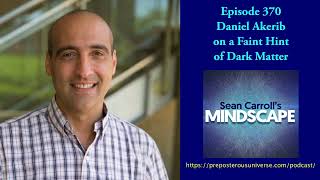
Daniel Akerib on a Faint Hint of Dark Matter | Mindscape 370

43K views · 3w ago · 1:18:17

Blog post with audio player, show notes, and transcript One reason it's been so hard to directly detect the dark matter is that we're not sure what it is. But for a long time, a leading candidate has been "Weakly Interacting Massive Particles" (WIMPs), so an impressive amount of experimental effort has been put into trying to detect them. Recently, a single provocative event appeared in the LUX-ZEPLIN (LZ) dark matter experiment.

1:23:31

Gregg Caruso on Living Well Without Free Will | Mindscape 369

25K views · 1mo ago · 1:23:31

Blog post with audio player, show notes, and transcript The worry about debates over free will is that they degenerate into semantics -- what do you mean by "free will," really? But there are important substantive issues that shouldn't be ignored. Do people deserve blame for doing wrong things? Can we make choices that create meaning for our lives?

1:21:20

Jared Diamond on the Course of History and the Role of Leaders | Mindscape 367

25K views · 1mo ago · 1:21:20

Blog post with audio player, show notes, and transcript The course of history is affected by many things, including the political and social situations of large groups of people, their biological and physical abilities, and their geographical and environmental contexts. Sometimes, it would seem, history -- or corporations, or religions, or sports teams -- can be affected by the actions of just a few influential persons.

1:16:42

Jim Al-Khalili on Time, Quantum, Biology, and Cosmology | Mindscape 366

68K views · 2mo ago · 1:16:42

Blog post with audio player, show notes, and transcript Everyone lives through time, but we continue to struggle to fully understand it. We remain unsure whether time is fundamental or emergent, why it has an arrow pointing from past to future, and how that arrow connects to our experience of time's passage. Jim Al-Khalili's new book is On Time: The Physics that Makes the Universe Tick.

1:09:24

Vitor Cardoso on Why Black Holes Are Special (updated) | Mindscape 365

36K views · 2mo ago · 1:09:24

Blog post with audio player, show notes, and transcript Black holes, as Stephen Hawking discovered, do grow old: they emit radiation, lose mass, and eventually evaporate away. But our fascination with black holes never grows old. This is especially true today, as we are seeing a flood of new data and intriguing theoretical ideas, which both tests the limits of Einstein's general relativity and teach us new things about the astrophysical universe.

1:18:43

Stuart Firestein on How Science Relies on Ignorance and Failure | Mindscape 364

13K views · 2mo ago · 1:18:43

Blog post with audio player, show notes, and transcript One of the paradoxes of science is that it seeks objectively true understanding of the world, but its methodology is driven by ignorance, failure, and uncertainty. Some phenomena we understand pretty well, but interesting research happens at the boundary of what we do and don't know. And there is no foolproof algorithm for moving in the right direction; we need to make conjectures and test them against the world.

1:54:14

Chandra Sripada on How LLMs and Humans are Cognitive Cousins | Mindscape 363

19K views · 2mo ago · 1:54:14

Blog post with audio player, show notes, and transcript Large Language Models display an uncanny ability to construct human-sounding speech, and can synthesize concepts in novel ways. Is this because they are truly thinking like human beings in some way, or have they found a way to be human-like without reproducing the internal mechanisms of human thought?

1:25:22

Luis Bettencourt on the Universal Properties of Self-Organizing Cities | Mindscape 362

8.4K views · 3mo ago · 1:25:22

Blog post with audio player, show notes, and transcript People who live in large cities produce more patents per person than those who live in small towns. They also walk faster down the street, and use less infrastructure per person. Indeed, the relationships between these quantities and city population obey power laws with apparently universal exponents, reminiscent of scaling laws is biological organisms?

1:17:55

Bonnie Bassler on How Bacteria Talk and Work Together | Mindscape 361

11K views · 3mo ago · 1:17:55

Blog post with audio player, show notes, and transcript One of the characteristics of life is that living organisms gather information and put it to use. Even one of the simplest lifeforms, bacteria, are able to sense features of their surroundings and alter their behavior accordingly. Most impressively, they are able to sense the presence of similar bacteria by a process called quorum sensing.

1:29:38

Marc Berman on the Science of Touching Grass | Mindscape 360

12K views · 3mo ago · 1:29:38

Blog post with audio player, show notes, and transcript Modern life has, in many ways, removed us from the environments in which our ancestors lived and adapted. Not only do we spend time looking at screens, but we spend time indoors, or outdoors but in urban spaces. How does this affect how we think and feel?

1:56:11

Solo: Theories of Dark Energy | Mindscape 359

61K views · 4mo ago · 1:56:11

Blog post with audio player, show notes, and transcript The cosmological constant, as discussed last episode, provides a perfectly good (thus far) explanation for why we observe the universe to be accelerating. But it might not be the right explanation, and demonstrating that would be yet another foundational discovery.

2:02:02

Solo: Vacuum Energy and the Cosmological Constant | Mindscape 358

53K views · 4mo ago · 2:02:02

Blog post with audio player, show notes, and transcript The most surprising discovery in fundamental physics during my career as a scientist was undoubtedly the acceleration of the universe, announced in 1998. The most straightforward explanation for these observations is a positive cosmological constant, or vacuum energy.

1:21:09

Jeff Coller on mRNA, Vaccines, and Bespoke Therapeutics | Mindscape 357

10K views · 4mo ago · 1:21:09

Blog post with audio player, show notes, and transcript Messenger RNA (mRNA) plays a literally central role in the functioning of life as we know it, shuttling information back and forth between the DNA where it is stored to the ribosome where it is used to produce proteins. RNA may even have been the first molecule to kick-start the origin of life.

1:17:13

Andrea Wulf on Enlightenment, Nature, Romanticism, and Modernity | Mindscape 356

12K views · 4mo ago · 1:17:13

Blog post with audio player, show notes, and transcript All ideas have a history, no matter how inevitable and well-entrenched they may seem to us today. The later Enlightenment was a heady time when people were exploring new conceptions of nature, humanity, and the self. Andrea Wulf is a writer of narrative histories, examining the origins of ideas through the lives of the people who explored them.

1:44:25

Solo: Looking Quantum Mechanics in the Eyeball | Mindscape 355

57K views · 5mo ago · 1:44:25

Blog post with audio player, show notes, and transcript One of the major obstacles to understanding quantum mechanics is the difficulty we have in simply accepting what the theory itself is telling us. The problem is that we know what the everyday world looks like -- stuff, arranged in space, evolving through time. So we can't resist the temptation to impose that picture on the quantum description, even if it's not actually there.

1:14:23

Alvin Roth on the Economics of Morally Contested Markets | Mindscape 353

7.1K views · 5mo ago · 1:14:23

Blog post with audio player, show notes, and transcript Economic markets are efficient ways of deciding fair prices, at least in ideal circumstances of perfect competition, information, and choice. But there is more to life than fair prices. Two people might decide on a fair price to carry out a contract killing, but society generally frowns on the idea.

1:16:43

Bing Brunton on Connecting the Connectome to the Body | Mindscape 352

9K views · 6mo ago · 1:16:43

Blog post with audio player, show notes, and transcript The connectome is the wiring diagram of a brain, a big matrix that tells us what neurons talk to what other neurons. Understanding it is an important step to understanding how brains work, but a long way from the final answer. A big next step is understanding how neuronal circuits connect to and guide bodily behavior. Very recent work on mapping the fruit-fly connectome has brought us closer to that goal.

1:15:37

Peter Singer on Maximizing Good for All Sentient Creatures | Mindscape 351

11K views · 6mo ago · 1:15:37

Blog post with audio player, show notes, and transcript Peter Singer has been an influential philosopher for a number of decades. He was a significant early voice in animal rights, has been a leading thinker of utilitarianism, and helped inspire the effective altruism movement. In this podcast episode, we try our best to talk about all of those things -- working from metaethical questions of consequentialism vs.

1:22:38

J. Eric Oliver on the Self and How to Know It | Mindscape 350

12K views · 6mo ago · 1:22:38

Blog post with audio player, show notes, and transcript We are more familiar with ourselves than with anything else in the universe, but we generally don't come very close to really understanding what our "self" is. That's not too surprising, as selves are very complicated and we are burdened by all sorts of biases. Today's guest is J.

Showing the 30 most recent episodes. Everything plays right here on Pod Atlas.

Have thoughts about Sean Carroll's Mindscape? Share them with other listeners.

Discuss this podcast

More Science & Space podcasts

← Back to all podcasts