the study spot

the study spot

@thestudyspot · 69K subscribers · 129 videos · English

Episodes

20:36

Hepatitis C Virus for USMLE

944 views · 2y ago · 20:36

In this handwritten video we will review the Hepatitis C Virus pathology, epidemiology, clinical presentation and treatment options for the purposes of studying for the USMLE Step 1 and USMLE Step 2 boards. VIROLOGY The Hepatitis C Virus contains single stranded non-segmented positive sense RNA, wrapped in nucleocapsid which is within an envelope. Hepatitis C virus is a flavir virus of the genus hepacivirus. Hepatiits C virus has a large amount of viral diversity.

Topics: Pathophysiology · Epidemiology · Clinical · Diagnosis · Treatment

34:17

Hepatitis B Virus for the USMLE

1.7K views · 2y ago · 34:17

Handwritten lecture about Hepatitis B Virus pathophysiology, diagnosis and treatment for medical students studying for the USMLE boards. BONUS QUESTION- What kind of vaccine is Hepatitis B? Vaccine is a subunit against sAg

Topics: Structure · Pathophysiology · Transmission · Epidemiology · Diagnosis and Serology · Acute Hepatitis

19:29

Hepatitis A Virus (HAV) for USMLE

36K views · 5y ago · 19:29

Handwritten Lecture on symptoms and treatment for Hepatitis A Virus (HAV) for medical students studying for USMLE Step 1, USMLE Step 2, and USMLE Step 3 review. During your USMLE review, it is helpful to watch this video and then attempt questions in the Kaplan QBank or UWorld QBank.

41:59

Acute Cholecystitis (2/3)

35K views · 6y ago · 41:59

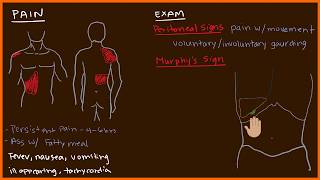
Handwritten lectures about Cholecystitis for USMLE Step 1 and USMLE Step 2 ANATOMY OF BILIARY TRACT IN PATIENTS WITH CHOLECYSTITIS The gallbladder is connected to the cystic duct. The cystic duct combines with a hepatic duct which forms the common bile duct. It combines with the pancreatic duct to excrete through the sphincter of Oddi. Generally, Cholecystitis occurs when a stone is lodged into the cystic duct

Topics: Anatomy · Pathophysiology · Complications · Symptoms, Physical Exam Findings, Labs · RUQ Ultrasound · HIDA Scan

25:41

Gallstones Review for USMLE (1/3)

74K views · 6y ago · 25:41

This is a handwritten lecture discussing Gallstone for medical students studying for the USMLE boards. BONUS QUESTION: What risk does a porcelain GB pose and how does it occur? GB adenocarcinoma from chronic cholecystitis

Topics: Anatomy of Gallbladder · Formation of the Gallstone · Types of Gallstones · Causes of Gallstones · Symptoms of Gallstones · Ultrasound

19:00

Hypercalcemia for USMLE Step 1 and USMLE Step 2

20K views · 9y ago · 19:00

Handwritten Video Lecture on Hypercalcemia for USMLE Step 1 and USMLE Step2. Hypercalcemia is defined as a serum calcium level greater than 10.5 PHYSIOLOGY OF HYPERCALCEMIA Influences of calcium. In hypocalcemia the CaSR detects this within the parathyroid gland. Parathyroid stimulates bone to increase osteoclastic activity which breakdown bone and increase calcium leading to hypercalcemia.

32:59

Peptic Ulcer for USMLE Step 1 and USMLE Step 2

33K views · 9y ago · 32:59

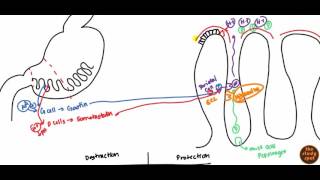
Handwritten lecture on Peptic Ulcer Disease for USMLE Step 1 and USMLE Step 2. Will be covering pathophysiology, pathogenesis, symptoms and treatment. PHYSIOLOGY OF PEPTIC ULCER DISEASE There are many important cells responsible for maintaining stomach pH.

14:58

SIADH for USMLE Step 1 and USMLE Step 2

12K views · 9y ago · 14:58

Handwritten video lecture on pathogenesis, pathophysiology symptoms and treatment of SIADH for USMLE Step 1 and USMLE Step 3. In SIADH there is increased secretion of ADH or vasopressin which leads to increase reabsorption of water leading to water intoxication. PHYSIOLOGY OF ADH Osmoreceptors detect high osmolality which activates the hypothalamus to produce and release ADH. ADH is then stored in the posterior pituitary and released.

17:56

Diabetic Retinopathy for USMLE Step 1 and USMLE Step 2

134K views · 9y ago · 17:56

Handwritten Video Lecture on the pathophsyiology, symptoms and treatment of Diabetic Retinopathy for USMLE Step 1 and USMLE Step 2 PATHOPHYSIOLOGY OF DIABETIC RETINOPATHY Hyperglycemia increases blood flow to the retina which damages blood vessels and become leaky causing macular edema.

15:27

Diabetic Nephropathy for USMLE Step1 and USMLE Step 2

70K views · 9y ago · 15:27

Handwritten Video Lecture on the Pathophysiology, Symptoms and Management of Diabetic Nephropathy for the USMLE Step 1 and USMLE Step 2 PATHOPHYSIOLOGY OF DIABETIC NEPHROPATHY Damage begins with dilation of the afferent dilation in the glomerulus. This is due to Advanced Glycosylated Enzymes (AGE). These AGE forms crosslinks in the collagen which increaes permeability of the glomerulus. This is one of the main factors leading to diabetic nephropathy.

Showing the 11 most recent episodes. Everything plays right here on Pod Atlas.

Have thoughts about the study spot? Share them with other listeners.

Discuss this podcast

More Society, Culture & Lifestyle podcasts

← Back to all podcasts