Alfonso Gonzalez - Astrodynamics & SE Podcast

Alfonso Gonzalez - Astrodynamics & SE Podcast

@alfonsogonzalez-astrodynam2207 · 14K subscribers · 145 videos · English

Astrodynamics with Python and the Space Engineering Podcast. Orbital Mechanics, Spacecraft Attitude Control, Numerical Methods Link to Space Engineering Podc…

Episodes

9:10

Lagrange Points Derivations | Orbital Mechanics with Python 55

4.7K views · 4y ago · 9:10

Guest: Lagrange Points Derivations

In this video we go over the derivation of the 5 Lagrange points in the CR3BP which occur when the gradient of the pseudo-potential function omega is equal to zero. We start with the co-linear solutions where the y and z position components are equal to zero from which we need a root solver to converge on the resulting x coordinates of L1, L2 and L3.

9:39

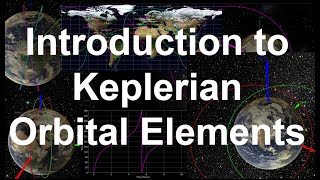
Keplerian Orbital Elements Introduction | Fundamentals of Orbital Mechanics 5

21K views · 4y ago · 9:39

Guest: Keplerian Orbital Elements Introduction

In this video we introduce the keplerian orbital elements, which include semi-major axis, eccentricity, the orientation of the perifocal frame with respect to the inertial frame with the 3 angles: orbital inclination, right ascension of the ascending node, and argument of periapsis, and finishing with true anomaly.

▶️ Mentioned videos: to video explaining how to use AID

5:17

Gradient of CR3BP Gravitational Pseudo-Potential Function | Orbital Mechanics with Python 53

2K views · 4y ago · 5:17

In this video we go over the circular restricted 3 body problem pseudo-potential function, how to calculate its gradient (vector of partial derivatives) with respect to the position vector which we’ll use for our second order differential equation to be able to propagate trajectories in this rotating reference frame. And is how it is plugged into the CR3BP class differential equation method in the GitHub repository.

1:44:59

Dr. Kira Abercromby, Space Debris Tracking, Spacecraft Environments | Space Engineering Podcast 6

2.8K views · 4y ago · 1:44:59

Dr. Kira Abercromby is a professor in the Aerospace Engineering department of Cal Poly San Luis Obispo. She previously worked at NASA Johnson doing ongoing work from her PhD where her thesis was titled: Using Reflectance Spectroscopy to Determine Material Type of Orbital Debris.

Topics: Kira's background (astrophysics, PhD at Boulder, NASA) · The space / orbital debris problem · Deorbit plans requirements · Differences between LEO and GEO space debris · Geostationary transfer orbit (GTO) rocket bodies · Hypervelocity space debris impacts

6:49

Circular Restricted 3 Body Problem (CR3BP) Introduction | Orbital Mechanics with Python 52

7.3K views · 4y ago · 6:49

In this video we introduce the circular restricted 3 body problem in astrodynamics, starting with the geometry of the problem and the definition of the CR3BP rotating reference frame. We then get into the equations of motion in the rotating reference frame, where we must account for the coriolis, centrifugal, and gravitational accelerations as they are seen in the rotating frame.

6:57

Coriolis and Centrifugal Derivations, Rotating Reference Frames | Orbital Mechanics with Python 51

7.6K views · 4y ago · 6:57

This video goes over the derivation of the coriolis and centrifugal accelerations using vector calculus by first taking the derivative of position in a rotating frame vs time, where because the unit vectors that describe the position are themselves rotating, we must use the derivative product rule to determine the full derivative from the perspective of the rotating frame.

8:14

Solar Eclipse Latitude / Longitude Calculations, Earth, Jupiter | Orbital Mechanics with Python 47

1.5K views · 4y ago · 8:14

In this video we go over how to calculate the latitude and longitude coordinates of solar eclipses, using the examples of Earth with the 2017 great American eclipse and all total solar eclipses for the next 5 years, as well as Jupiter’s 2021 triple eclipse with Europa, Ganymede, and Callisto.

▶️ Mentioned videos: math) · Python implementation) · math) · Python implementation)

7:35

Eclipse Geometry, Umbra and Penumbra, Lunar Eclipse 2021 | Orbital Mechanics with Python 46

2K views · 4y ago · 7:35

In this video we go over how to calculate whether an object is in eclipse (umbra or penumbra) using 3D cone geometry and linear algebra, and then we’ll plug in these calculations using real life examples including the lunar eclipse that happened yesterday (2021-NOV-18), and geostationary, sun synchronous terminator, and the ISS orbits around Earth.

6:34

pytest for Unit Testing in Python | How to Python 2 | Python Tutorials

578 views · 4y ago · 6:34

Guest: Python Tutorials

In this video we go over how to use the Python package pytest to implement unit tests using the Astrodynamics with Python repository to go over examples using the Python assert statement, approximately equal function, numpy arrays, warnings, errors, and how to use pytest from the command line by calling it directly or through the Python interpreter.

Showing the 15 most recent episodes. Everything plays right here on The Pods.

Have thoughts about Alfonso Gonzalez - Astrodynamics & SE Podcast? Share them with other listeners.

Write a review

More Science & Space podcasts

← Back to all pods