Butterfly Spanish

Butterfly Spanish

@butterflyspanish · 1.7M subscribers · 202 videos · English

Learn Spanish for free with Spanish lessons that cover grammar, pronunciation, vocabulary, tips & tricks, and cultural aspects. My Spanish lessons are for all Spanish levels and are based on my passion for Spanish culture, language, and teaching. I want to make you confident speaking Spanish, and to encourage you and provide you with all you need to make your dream of speaking Spanish come true. Whether you decided to learn Spanish in your dreams, or failed your Spanish exam, or want to communicate with your Spanish friends, or will travel to a Spanish speaking country soon and are afraid beca

What learners say

Watched Butterfly Spanish? Tell other learners what you think below, or read the discussion around the channel.

Click to see the discussion

Videos

7:32

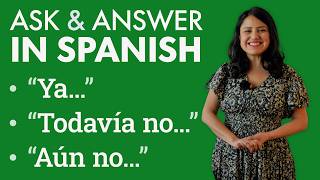
“Already” & “Not Yet” in Spanish: “YA” & “TODAVÍA NO”

20K views · 10d ago · 7:32

Answer in Spanish with "ya", "todavía no", and "aún no". Express that you have already done something or that you have not yet done something. Ya (already) shows that an action has been completed. "Todavía no" (not yet) indicates an action has not happened or been completed but it is expected to be. They are opposite words so you can respond yes or no with the correct grammatical structure. For example: "Ya desayuné" and "Todavía no".

Topics: Todavía no · No + Haber + Participio · Using "todavía no"

11:08

Spanish Vocabulary: Space or No Space? porque, por qué, sino, si no...

45K views · 1mo ago · 11:08

Guest: Spanish Vocabulary

Learn these Spanish words in whole and in half. When you divide these words, you get two meanings. The problem with these Spanish words is that they might sound the same, but they have different meanings. Think of the words aparte and a parte, or también and tan bien, por qué and porque, and so on.

Topics: medio día vs mediodía · tan bien vs también · si no vs sino · aparte vs a parte · por qué vs porque · acerca vs cerca

11:06

"PASAR": So Many Ways to Use This Spanish Verb

88K views · 2mo ago · 11:06

Pasar is a verb used every day in Spanish. Learn all about it in this class. Pasar is a very common and versatile verb in Spanish, and its meanings depend on the context. So think of English verbs and expressions such as to go by, to have a good or a bad time, to stop by, to ask what happened, to spend one's time doing something. ALL these actions are expressed in Spanish using the verb pasar.

Topics: ¿Cómo la pasaste? · La pasé bien. · ¿La pasaste bien? · Nos la pasamos bien. · ¿Qué pasó? · ¿Qué pasa?

22:28

Can you answer in Spanish? Use “llevo”, “desde hace”, and “desde”

49K views · 4mo ago · 22:28

Ask and answer in Spanish using "llevo", "desde", and "desde hace". Say what activity you have been doing from a moment in the past until now. Use the Spanish verb "llevar" to say for example: "Llevo 40 años estudiando español" (I have been studying Spanish for forty years). This Spanish grammatical structure consists of using the verb "llevar" in present + the period of time + the gerund for the main verb. For example, "llevo dos días estudiando...

Topics: llevo + period of time + gerund · I have been, llevo · ing, ando, iendo, Spanish gerund · Present of verb llevar · Verb llevar, Spanish conjugation · Examples with llevo, lleva, llevamos

12:34

Learn to Exaggerate in Spanish

29K views · 6mo ago · 12:34

Turn "fácil" into "facilísimo", "caro" into "carísimo", "alta" into "altísima". Turn Spanish words into super Spanish words. By adding the ending "ísimo", you will give words a more intense meaning. Think of saying that place is good vs that place is really good, super good. This is what I will teach you in this Spanish vocabulary lesson, to not say "bueno", but "buenísimo", not "divertido", but "divertidísimo", and so on.

Topics: Adding "ísimo" in Spanish · Facilísimo · Dificilísimo · Buenísimo · Malísimo · Aburridísimo

14:10

Have a conversation in Spanish using 3 verbs to ask & answer questions

54K views · 9mo ago · 14:10

You will learn to use the Spanish verbs you hear or see to make your own questions and answers. You will review the past tense of the verbs ir, ver, salir, sacar, gustar, and some reflexive verbs like acostarse, and levantarse to give answers and to ask questions. You will also learn how to use some prepositions that go along certain verbs, like "ver".

Topics: ¿Qué hiciste? Wha did you do? · Saqué a pasear al perro - I took the dog for a walk · Vi a + someone - I saw (someone) · Salí con mis amigos - I went out with... someone · Past of ir - fui, fuiste, fuimos, fueron - went · Fui a comer tacos - I went to eat tacos

12:30

Learn to Describe Food in Spanish

40K views · 10mo ago · 12:30

You will learn to use the verbs "ser" and "estar" to express common flavors. Do you know what the difference is between "es picante" and "está picante"? You will learn why we have to use sometimes ser and sometimes estar depending on what we mean. Watch this lesson and learn to express your taste, to describe food, and more importantly, to use the correct verb depending on the context. Moreover, increase your Spanish vocabulary and improve your Spanish.

Topics: salado, salty · dulce, sweet · amargo, bitter · picante, spicy · ácido, acid flavor · grasoso, greasy

14:07

Spanish Lesson: What are your New Year's resolutions?

33K views · 10mo ago · 14:07

Say your resolutions for this year in Spanish. I will teach you the top resolutions for the new year in Spanish. I will also teach you the most common Spanish grammatical structure, so you can write your own resolutions in Spanish. This lesson will improve your Spanish, your vocabulary, your grammar and more mucho más. You will learn to wish someone Happy New Year in Spanish.

Topics: Feliz Año Nuevo, Happy New Year in Spanish · Este año voy a aprender español, This year I am going to learn Spanish · Este año me voy a poner en forma, This year I am going to get in shape · Este año voy a ponerme a dieta, I am going to get into a diet. · I am going to stop smoking, Voy a dejar de fumar · Voy a dejar de tomar, I am going to stop drinking

11:57

3 Ways to Use the Verb "IR" in Spanish: VOY EN, VAMOS CON, VA A...

27K views · 11mo ago · 11:57

Learn three essential ways we use the verb "ir" in Spanish. Say I am going by car, I am going with Julio, I am going to Playa del Carmen – in Spanish. The verb "ir" in Spanish is quite common in everyday life: yo voy, tú vas, ella va, nosotros vamos, ustedes o ellos van. In this class you you will learn to say how you are getting to a place, who are you going with, and where you are going.

Topics: Conjugation of ir -voy, vas, va, vamos, van · Voy en.. - using ir and the mode of transportantion · Voy en bici - I am going by bycicle · Voy en moto - I am going by motorcycle · Voy en coche -I am going by car · Voy en patineta - I am going by skateboard

18:28

Learn Spanish: A VECES, SIEMPRE, NUNCA, JAMÁS, and more frequency vocabulary

69K views · 1y ago · 18:28

Guest: Learn Spanish

Say how often you do something in Spanish: siempre, nunca, a veces, casi nunca, or jamás. You will learn to insert these Spanish words of frequency in the correct places in your sentences. You will learn vocabulary, grammar, and pronunciation to make your Spanish complete. You will learn to say handy phrases like I do something every other day, every month, or once in a while. Watch this lesson and continue with your Spanish studies.

Topics: siempre, always · casi siempre, almost always · generalmente, generally · normalmente, normally, generally · muchas veces, many times · a veces, sometimes

18:46

The "g", "gu" in Spanish ---All you need to know!

45K views · 1y ago · 18:46

Learn everything about the sound "g" in Spanish Saludos y abrazos de oso, Ana of the Julii Thank you so much for watching my videos. It fills my heart with joy knowing that you are learning Spanish with me. or PAYPAL lalalalala lalalalala,

Topics: ga in Spanish · go in Spanish · gu in Spanish · gue in Spanish · gui in Spanish · gue, ge, je, gui, gu, ji in Spanish

14:31

25 Polite Sentences in Spanish: Elevate your Spanish and speak respectfully!

107K views · 1y ago · 14:31

Learn polite Spanish and show you are well-mannered. You will learn respectful expressions and words. Whether you may tell someone, "please, go ahead", "adelante", or say "just give me a minute", "permítame un momento", or wish somebody to have a good time, que le/te vaya bien, this class will have a phrase to say something good, nice, respectful, courteous, and polite. So take a moment to watch this lesson so you keep learning Spanish. Aprende español ahora y para siempre.

Topics: 1, 2, 3 · 4, 5 · 6,7,8 · 9, 10 · 11, 12, 13 · 14, 15

12:25

The Q in Spanish: All you need to know – q, qu, qui, que, ca, co, cu

34K views · 1y ago · 12:25

There are a lot of Qs in Spanish! Q, Qu, Qui, Que... ahhh! Improve your Spanish pronunciation and master all the Spanish tricks to say the right Q at the right time. Learn to recognize the signs that the Q gives you in order to get the correct pronunciation and spelling. In this lesson you will learn important information about the letter, you will learn new vocabulary, and you will continue building your Spanish.

Topics: que in Spanish · qui in Spanish · qu and o · co in Spanish · cu vs qu in Spanish · Review ca, co, cu

10:06

Learn Spanish Grammar: No había... (I hadn't done) in Spanish.

67K views · 1y ago · 10:06

Guest: Learn Spanish Grammar

You had not done something until that moment! How do you say this in Spanish? Watch this lesson and learn how to express what you had not done until that moment in Spanish. For example, "I had not had time", No había tenido tiempo, or "I had not seen you", No te había visto. Learn to use the Spanish verb "haber" and add a past participle to make this Spanish grammatical structure happen. Learn Spanish grammar in an easy and fun way.

Topics: I had not done something in Spanish · No había tenido tiempo · No había tomado el autobús · No había salido contigo · No había visto esta película · Past participle endings in Spanish

24:50

Master the most confusing Spanish sounds!

46K views · 1y ago · 24:50

Fix your Spanish pronunciation and spelling. Learn about letters and sounds in Spanish that cause confusion, and get them right once and forever. After watching this lesson, you will improve your Spanish pronunciation so you feel more comfortable speaking Spanish. In this class, you will learn the sounds with all their tricks so you speak Spanish clearly without being misunderstood. We will review the "b" and the "v": be de vaca, ve de burro.

Topics: B or V in Spanish · Spanish Vowels · I or Y in Spanish · Y or LL in Spanish

27:25

Learn Spanish in 30 minutes: 40 Spanish expressions used every day!

389K views · 1y ago · 27:25

Learn, memorize, and practice 40 essential Spanish expressions. Add to your practical and up-to-date Spanish vocabulary. You will listen and repeat these sentences so you improve your Spanish comprehension, increase your Spanish vocabulary, and reinforce your Spanish pronunciation. At the same time, you will learn nuanced ways to ask and give answers in Spanish. You will learn common questions and answers that are used daily.

Topics: 1, 2, 3 · 4, 5, 6, 7 · 9, 10, 11 · 12, 13, 14 · 15, 16 · 19, 20

21:33

Essential Spanish Vocabulary for the Holidays

43K views · 1y ago · 21:33

Learn Spanish vocabulary for December. Memorize Spanish verbs and nouns that are useful for the holiday season. Whether you will buy gifts, comprar los regalos, wrap them, envolver los regalos, return them, devolver los regalos, celebrate something, festejar algo, relax, sleep, go out, get together with your friends and colleagues, have dinner, or get a refund, un reembolso, this Spanish class will give you a good push to continue learning Spanish.

Topics: Comprehension Practice Part 1 · Comprehension Practice Part 2 · Comprehension Practice Part 3 · Farewell

8:29

Speak Spanish Now: Learn 3 Easy Spanish Expressions

48K views · 2y ago · 8:29

Guest: Speak Spanish Now

Learn common expressions that Spanish speakers use every day! You will learn to use the common expressions "ya sabía", "a poco", "ahorita", and properly use them in the correct context. You will learn what a "sábelo todo" is in Spanish, and why this noun is funny and important. You will practice your comprehension and Spanish listening skills. You will acquire useful vocabulary that will improve your Spanish fluency.

19:24

“Hace _____” or “es ______”? Spanish Adjectives & Verbs that go together

125K views · 2y ago · 19:24

Why do we say "hace calor" & "hace frío" and NOT "es calor" & "es frío"? Learn everything about the verb "hace". Learn how to use the Spanish verbs "hace", "hacía", "hizo" to talk about the weather, about things, and yourself. Use correctly all the Spanish words for cold, heat, hot: calor, cálido, caliente, caluroso, frío, fría, and so on. Watch this Spanish lessons and start saying correctly what you want to say in Spanish.

Topics: Hace for weather. · Es frío or caliente? · Examples · Hizo calor. · Hará calor. · Hacía calor.

15:00

Learn Spanish abroad: Learn Spanish in Xela, Guatemala!

35K views · 2y ago · 15:00

Hear from students who are studying Spanish in Guatemala, and visit two Spanish schools in a hub of culture and tradition, Quetzaltenango. I talk to Miguel and Katy, a beginner and an advanced medical student. I made this video for you, so you can imagine yourself studying Spanish here. I will take you around the schools, talk to the teachers, and have a fresh Mayan coffee.

11:37

Spanish Questions & Answers using TENER: "¿TIENES...?" "TENGO..." Start speaking now!

197K views · 2y ago · 11:37

Say how you feel in Spanish using the correct expressions. Learn to ask and answer using the proper grammatical structures. Ask and answer using the verb "tener": tienes, tengo, tenemos. Learn to give answers using the correct conjugation of the verb "tener". Start having a conversation with practical Spanish verbs and learn to express how you feel. Learn vocabulary, grammar, and everyday, useful Spanish. And, as an extra, learn how to say "I feel like having..." in Spanish.

Topics: "Are you okay?" · "How are you feeling?" · "How are you?" · ¿Tienes miedo? Tengo miedo. · ¿Tienes calor? Tengo calor. · ¿Tienes frío? Tengo frío.

▶️ Mentioned videos: Video on youtube.com · Video on youtube.com

15:51

Speak Spanish at the table! Easy Spanish Conversation

79K views · 2y ago · 15:51

Have a conversation in Spanish at the dinner table! Learn words, phrases, questions, and answers related to dining. Don't say "I wish I knew how to say this and that." Instead, learn to say it. Next time you are at the table just about to eat, you will know how to say in Spanish "pass me the pepper", or the the salt or the hot sauce, "How did you make this?, "Did you like it?", "Was it good?", "Enjoy!", and more.

Topics: First part · Second part · Third part

10:24

Speak Spanish: How to order ice cream and popsicles – Helados, paletas y más...

55K views · 2y ago · 10:24

Guest: Speak Spanish

Order ice cream and popsicles (helados y paletas) in Spanish! Learn new words, grammar, and expressions that will come in handy to order. Are you in Mexico with a sweet tooth and you won't get your ice cream because you don't know how to order? SHAME. My niece Dani and I will teach you everything you need to know. Do you know the difference between helado and nieve? You will soon.

10:05

Study Spanish Abroad: Take classes by Lake Atitlán in Guatemala!

45K views · 2y ago · 10:05

Guest: Study Spanish Abroad

Do you want to learn Spanish abroad? Let's visit a Guatemalan Spanish school, located in San Pedro La Laguna – a picturesque, scenic town where you can learn Spanish one-on-one. I made this video for you so you imagine what it would be like to study Spanish in San Pedro Spanish School. I will take you around the school and talk to the director, Mario, so you get to see up-close a school that offers you personalized Spanish lessons in a country filled with history and culture.

20:23

Learn to answer in Spanish: ¿Qué estás haciendo? ¿Qué estabas haciendo? – estoy & estaba

351K views · 2y ago · 20:23

Talk about what you are doing or were doing in Spanish. I will teach you how to use the present and the imperfect tenses correctly. You will learn the difference between the verb "estoy" and "estaba". This class will improve your Spanish grammar, give you more vocabulary, and help you to speak Spanish more fluently. After watching this lesson, you should be able to correctly answer the following questions in Spanish: ¿Qué estás haciendo? ¿Qué estabas haciendo?

35:01

Learn Spanish in 35 minutes: The 100+ everyday Spanish sentences you need to know!

5.3M views · 2y ago · 35:01

Learn and memorize 117 Spanish sentences used every day! Memorize and practice with me these common phrases, sentences, and expressions that are practical, useful, and handy to anyone. Whether you are starting or continuing learning Spanish, this vocabulary will make an immediate difference to your Spanish fluency. Take 30 minutes for this class and you will get so much Spanish needed every day, anytime, everywhere.

Topics: First Part · Second Part · Third Part · Fourth Part

▶️ Mentioned videos: Video on youtube.com · Video on youtube.com

12:47

Spanish Conversation: Working in a touristy beach town – Dani's story!

53K views · 2y ago · 12:47

Guest: Spanish Conversation

Listen to a Spanish conversation between Ana and Dani about the life of a working person in one of the most touristy beach towns in México. You will practice your Spanish listening and comprehension skills because we speak only Spanish. With this video you will learn to make sentences in Spanish, and you will learn new words and expressions while also understanding social nuances of a culture.

31:11

"LE" in Spanish: Why, when, and how to use it!

161K views · 3y ago · 31:11

You will learn what "le" is in Spanish, when to use "le", and why. First, I will show you the different categories of Spanish pronouns: direct object, indirect object, subject pronouns, and reflexive pronouns. Second, we will focus on "le", a very commonly used indirect object pronoun in Spanish. You will learn why we use "le" in Spanish and where we place it in a Spanish sentence and why "le" is so important in the Spanish language.

24:10

Practice your Spanish with this story!

152K views · 3y ago · 24:10

You will learn real-life, practical, and common expressions in Spanish. I took part of a conversation I had with a Spanish native speaker and wrote it on the board for you. I use a real chat to teach you Spanish grammar, show you useful expressions, learn new verbs, and memorize more vocabulary, nouns and adjectives. You will learn the common Spanish adjectives for words such as long, short, narrow, wide, shallow, dark, light, and so on.

4:51

Learn Spanish: A day at the Plaza Central de la Antigua Guatemala!

39K views · 3y ago · 4:51

Guest: Learn Spanish

See the Plaza Central in Antigua, Guatemala – a meeting place packed with festive activities, artisans, food stands, colonial architecture, and all that makes a true Spanish-speaking place in the Americas. I went to Guatemala to visit some Spanish schools that have one-on-one Spanish programs. This is one of the first videos, in which you will be introduced to my guide, who tells us what places I will visit in Guatemala, and gives us some historic details about Antigua.

9:51

Learn Spanish: "Puedo" & "Puedes" --- What you need to know!

150K views · 3y ago · 9:51

Guest: Learn Spanish

You will learn to use Can I?, "¿puedo?", Can you?, "¿puedes?" to ask questions and give answers in Spanish. When you ask for permission and help, in Spanish you would use the verb "poder". However, you do not answer with the same verb "poder". You would actually answer these type of questions using other Spanish verbs, and expressions.

Topics: Puedo: Can I? May I? · Answer Spanish questions · May I... in Spanish · Puedo to ask for permission · Claro, por supuesto, adelante and

3:31

Explore Guatemala with Butterfly Spanish!

31K views · 3y ago · 3:31

Visit and explore Guatemala with me. Many of you have asked me about learning Spanish abroad. I went to Guatemala to explore the Spanish schools there. I made videos in each school, so you can imagine yourself studying Spanish there. I will publish these videos I took over the next few months.

Topics: I am in Guatemala! · Scenes from my Guatemala trip!

23:28

Learn Spanish: "Me gusta" – ALL about GUSTAR!

116K views · 3y ago · 23:28

Guest: Learn Spanish

You will learn how to use the Spanish verb "gustar": "me gusta", "a mí me gusta", and all the other forms such as "te gusta", "a ti te gusta", "le gusta", "les gusta", and so on. While "me gusta" is equivalent to the English "I like...", the literal meaning of "me gusta" would be "it is pleasing to me". This "pleasing to me" business of "me gusta" causes a lot of commotion among students who are learning Spanish. I made this class so you use "gustar" well and correctly.

Topics: Me gusta...to do something · Me gusta... things and objects · Me gusta... a place, a city, a country · Me gusta... somebody · Making sentences with "Me gusta" or "No me gusta" · No me gusta

14:44

Learn Spanish: Use these words instead of "BUENO"

78K views · 3y ago · 14:44

Guest: Learn Spanish

Increase your Spanish with this lesson. "Bueno" is one of the most overused words when you are learning Spanish. In this lesson I will teach you to use other, more accurate Spanish words, depending on the context, instead of using "bueno" all the time. I will teach very common, practical, and everyday vocabulary to speak Spanish more fluently and to be more precise when you are speaking Spanish.

Topics: Simpático · Agradable · Cordial · Amable · Tranquila · Bondadoso

▶️ Mentioned videos: Video on youtube.com

27:58

Spanish Grammar: "QUEDAR" & "QUEDARSE" – Learn the many uses of this verb!

180K views · 3y ago · 27:58

Guest: Spanish Grammar

The Spanish verb “quedar” is like all-purpose flour. "Quedar" (keh-dahr) is flexible, adaptable, all-purpose, useful, practical, and diverse. The verb “quedar” tells on your ideas, feelings, looks, plans, availability, current and past state of mind, and so much more. In this Spanish class, you will learn a lot about the verb "quedar" and its cousin “quedarse”. So, “no te quedes sin ver este video” (don’t stay without watching this video).

33:36

Spanish Comprehension & Listening Practice: Ana's chores

79K views · 3y ago · 33:36

Do you want to understand spoken Spanish? Do it with this Spanish conversation. In this Spanish class, you will listen and review expressions, vocabulary, and verbs related to laundry chores. The vocabulary and expressions you will learn are related to clothes, washing, drying, hanging, folding, dry-cleaning, and so on.

Topics: Listen to the story · Vocabulary review · What do we need to wash clothes? · Practice Listening and comprehension

20:19

Learn Spanish Vocabulary: 12 adjectives you need to learn

185K views · 3y ago · 20:19

Guest: Learn Spanish Vocabulary

You will learn the first 12 Spanish adjectives starting from the most commonly used. You will learn each Spanish adjective in context because I will give you examples of when and how to use the words you are learning. Start building your vocabulary with these words and see how your Spanish starts improving and becoming more accurate. This lesson will strengthen your vocabulary so you can communicate better and be understood more.

Topics: Fuerte y débil: strong and weak · Enfermo (sick) and sano (healthy) · Barato (cheap) and caro (expensive) · Limpio (clean) and sucio (dirty) · Rápido (fast) and lento (slow) · Apretado (tight) and flojo (loose)

37:49

Learn Spanish: Comprehension & Listening Practice – WHAT DO YOU FEEL LIKE DOING?

188K views · 3y ago · 37:49

Guest: Learn Spanish

This Spanish conversation will help you improve your comprehension and listening skills. You will hear a dialogue between two people deciding what activity they feel like doing on their day off. You will hear Spanish used in a real conversation. You will learn useful idiomatic expressions, everyday verbs used in context, and many words that are important to increase your vocabulary. You will also learn ways to correctly and politely ask questions and give answers.

Topics: Listening and Reading Spanish: Part 1 · Listening and Reading Spanish: Part 2 · Listening and Reading Spanish: Part 3 · Listening and Reading Spanish: Part 4 · Listening and Reading Spanish: Part 5 · Full Spanish Listening & Comprehension Practice

13:38

Learn Spanish: Voy, ya voy, ya me voy, voy a...

180K views · 3y ago · 13:38

Guest: Learn Spanish

Use "ya voy" and "ya me voy" correctly. Learn a major difference between "voy" and "me voy". Learn about all the possible, important, and practical combinations of the Spanish verb "voy" – "I go". Did you know that in Spanish, sentences such as "I am going", "I am leaving", "I am coming", "I am going to" require the Spanish verb "ir" ("voy, vas, va, vamos, van"). Do you know what the major difference is between "voy" and "me voy"?

Topics: What is "ya voy"? · What is "ya me voy"? · What is "voy"? · What is "voy a..."? · What is "voy por..."? · Review "ya voy", "ya me voy", "voy".

32:48

Learn Spanish: Conversation Practice – What are you thinking about?

201K views · 3y ago · 32:48

Guest: Learn Spanish

Practice your Spanish listening and comprehension skills with the story I wrote and will perform for you. This class will help you improve your Spanish comprehension by increasing your Spanish vocabulary, listening to real-life conversations, and using current Spanish. This story takes on the verb "pensar" and many of its forms (pensamiento, pensativo, piénsalo, pensando, etc.) This practice will accustom your ear to Spanish so you understand more every day.

Topics: Listen and understand the dialogue · Conjugation of verb "pensar" · I was thinking, estaba pensando... · Expressions with "pensar" · Complete Spanish listening Practice

55:10

50 Spanish Expressions You Need to learn to improve your Spanish

285K views · 3y ago · 55:10

Are you going away to a Spanish-speaking country? Nervous about your Spanish skills? Let me help you tackle the Spanish phrases, words, verbs, greetings, vocabulary, questions, and answers you need to navigate the Spanish world easily. In this lesson you will learn 50 of the most useful Spanish expressions. This is my gift for you because this lesson will help you learn what you need before your Spanish holiday.

Topics: Common Spanish questions in Spanish · Everyday Spanish expressions · Asking & giving information about you and others · Food and accommodation questions and expressions in Spanish · Getting connected! Internet and online related questions & expressions Spanish

17:10

Learn Spanish: ALL about the Mexican word "WEY" ("güey")

62K views · 3y ago · 17:10

Guest: Learn Spanish

I will teach you the word "wey" or "güey", very common in the Spanish in Mexico. You probably, at some point, have heard somebody Mexican said "wey". It is a controversial term in Mexico. Different people will give you different opinions about this word. Some will say it is low, some will say it is normal, some will say it is rude, some will say it is horrific, some will say I use it and I do not care.

Topics: What is "wey" in Mexico? · Who says "wey" in México? · What is "órale" in Spanish? · History of the word "wey" in Spanish · Expressions with the word "wey" · Reading "wey" in a real-life text message.

18:04

Learn Spanish: When to use "SER" – SOY, ERES, ES, SOMOS, SON

165K views · 3y ago · 18:04

Guest: Learn Spanish

In this Spanish lesson, you will learn the most important ways to use the verb "ser": soy, eres, es, somos, son. You will learn when to always use "ser", and when to never use "ser", which will help you to avoid making mistakes that some people drag for years. This lesson will enable you to become a fluent Spanish speaker but also an accurate Spanish speaker. If you are a person who is starting learning Spanish, this lesson will be key to your learning.

Topics: Soy + name · Soy + nationality · Soy + profession · Soy + everlasting quality · Soy + qualities in general · Soy + marital status

33:00

Learn Spanish in 30 Minutes: 50 Everyday Spanish Questions

790K views · 4y ago · 33:00

I will teach you the questions you need to learn in Spanish. You will learn many types of questions from basic to more advanced questions. This video will help you in many ways. For example, to start a conversation, to receive, provide, and ask for services in Spanish, to ask for favors, to inquire about something you are interested in, and to ask, in an effortless manner, everyday Spanish questions native speakers use.

Topics: First 10 questions · Part 2: Common questions in Spanish · Part 3: Question to get specific information · Part 4: The last 10 important questions

20:42

Learn Spanish: The verb "to try" – PROBAR, INTENTAR, TRATAR DE

132K views · 4y ago · 20:42

Guest: Learn Spanish

Learn the difference between the Spanish verbs "tratar de", "intentar", and "probar". These three verbs cause confusion because they can all be equivalents for the English verb "to try". Here, you will learn that this confusion is actually unnecessary because there are some guidelines to use the correct Spanish verb depending on the context. In this Spanish grammar lesson, I will show you with examples and simple and useful theory how to correctly use each verb.

Topics: Who is Ana Butterfly Spanish? · What are the differences between "intentar" and "tratar de" in Spanish? · Examples using the verb "probar" in Spanish · Intentar vs "Tratar de" in Spanish · What is an infinitive in Spanish? · Tratar vs "Tratar de" in Spanish

10:02

Learn Spanish: 12 sentences to introduce yourself in Spanish

943K views · 4y ago · 10:02

Guest: Learn Spanish

This is your first Spanish class. This is what you learn before anything else. How do you build your Spanish language foundations? Start with the basics and learn them well! In this video I will show you in 10 minutes the Spanish expressions you need to learn to speak about yourself. You will learn how to start a real-life Spanish conversation with others. Learn the basics, learn them well.

20:38

Learn Easy Spanish Grammar: "Espero que..." using subjunctive

150K views · 4y ago · 20:38

Guest: Learn Easy Spanish Grammar

Are you saying "espero que estés bien" or “espero que estás bien”? Learn to use the present subjunctive in everyday Spanish conversation. Learn to express your thoughts, hopes and wishes using the subjunctive. I will teach you many useful, everyday Spanish phrases that require the subjunctive.

Topics: Espero que estés bien or "Espero que están bien"? · Espero que puedas or "Espero que puedes"? · Espero que tengas or "Espero que tienes"? · Espero que vuelvas or "Espero que vuelves"? · Espero que llueva or "Espero que llueve"? · Espero poder or "Espero que puedo"?

36:38

Learn Spanish Vocabulary: Understand the news about crime and corruption

87K views · 4y ago · 36:38

Guest: Learn Spanish Vocabulary

Do you want to understand the news in Spanish? In this class, you will learn Spanish vocabulary, phrases, stories, verbs, and adjectives related to crime and corruption in México and América Latina. With this vocabulary, you will be able to listen to the news and podcasts in Spanish and read newspaper and magazine articles.

Showing the 48 most recent videos. Everything plays right here on The Pod Atlas.

Have thoughts about Butterfly Spanish? Share them with other learners.

Write a review

More Languages educational channels

← Back to all educational channels