PBS Space Time

PBS Space Time

@pbsspacetime · 3.5M subscribers · 466 videos · English

Space Time explores the outer reaches of space, the craziness of astrophysics, the possibilities of sci-fi, and anything else you can think of beyond Planet Earth with our astrophysicist host: Matthew O’Dowd. For all business inquiries and sponsorship opportunities please reach out to: pbsspacetime@lighthouseagents.com Matt O'Dowd spends his time studying the universe, especially really far-away things like quasars, super-massive black holes, and evolving galaxies. He uses telescopes in space to do it. Matt completed his Ph.D. at NASA's Space Telescope Science Institute, followed by work at th

What learners say

Watched PBS Space Time? Tell other learners what you think below, or read the discussion around the channel.

Click to see the discussion

Videos

1:57

How Black Holes EAT Entire Galaxies

113K views · 4d ago · 1:57

Black holes don't just swallow matter—they may be responsible for shutting down star formation across some of the largest galaxies in the universe. Discover how supermassive black holes unleash powerful quasars that disrupt their galaxies' gas supplies, leaving behind enormous collections of stars that astronomers call "red and dead."

📰 Mentioned news: Article on pbsspacetime.com · Search the Entire Space Time Library

1:58:16

So You Want To Understand Black Holes...

467K views · 7d ago · 1:58:16

Black holes are not just the strangest objects in the universe, they're the sharpest test we have of how reality actually works. This new compilation episode explores deeper topics in the mystery of black holes. We look back through a decade of content to understand their formation and the theoretical diagrams that describe them, offering a journey through the profound implications of these celestial objects for our understanding of space time and astrophysics.

▶️ Mentioned videos: Video on youtube.com

📰 Mentioned news: Article on pbsspacetime.com · Search the Entire Space Time Library

2:22

Can We Turn The Solar System Into A Spaceship?

239K views · 11d ago · 2:22

What if we could turn our entire solar system into a spaceship, using the Sun itself as an engine to travel across the galaxy? From giant solar sails to fusion-powered stellar engines, we explore the extraordinary technologies that could one day let humanity steer our solar system through the Milky Way.

📰 Mentioned news: Article on pbsspacetime.com · Search the Entire Space Time Library

1:45

String Theory Explained In Two Minutes!

205K views · 15d ago · 1:45

What if the fundamental building blocks of reality aren't particles, but tiny vibrating strings hidden within extra dimensions of space? We explore how string theory could unite quantum mechanics and general relativity, why it might hold the key to quantum gravity, and why physicists still debate whether it's a true description of our universe.

📰 Mentioned news: Article on pbsspacetime.com · Search the Entire Space Time Library

1:36

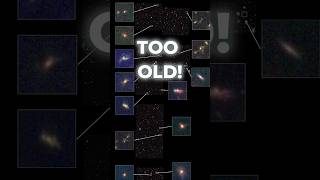
We Found Galaxies Too OLD For The Universe!

193K views · 18d ago · 1:36

The James Webb Space Telescope has discovered galaxies that appear far too massive and mature for the early universe, challenging our understanding of how quickly galaxies can evolve. Could rapidly growing supermassive black holes be the key to explaining how these ancient galaxies formed, stopped making stars, and grew up so fast?

📰 Mentioned news: Article on pbsspacetime.com · Search the Entire Space Time Library

19:06

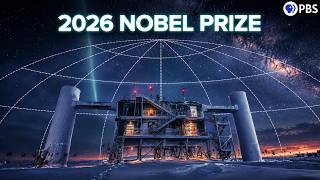
Ghost Particles Are Exposing Hidden Black Holes. They Just Won a Nobel Prize.

988K views · 22d ago · 19:06

The 2026 Nobel Prize in Physics went to Francis Halzen for helping turn a cubic kilometer of Antarctic ice into a telescope capable of detecting some of the universe’s most elusive particles: neutrinos. Discover how IceCube uses these ghost particles to trace cosmic rays back to their origins, reveal hidden supermassive black holes, and open an entirely new window on the universe.

Topics: The Nobel Prize for the World's Largest Telescope · The Mystery of Cosmic Rays · Why Neutrinos Are So Hard to Detect · How We Detect Neutrinos · The First Neutrino Telescopes · Turning Antarctic Ice Into a Telescope

📰 Mentioned news: Article on pbsspacetime.com · Search the Entire Space Time Library
1:56

There Are 1 Quadrillion Stars Behind This Grain of Sand

111K views · 25d ago · 1:56

There are nearly 10,000 galaxies and 1 quadrillion stars in a patch of sky no bigger than a grain of sand. How on Earth did we figure this out? Search the Entire Space Time Library Here Written by Richard Dyer & Matt O'Dowd Post Production by Leonardo Scholzer Directed by Andrew Kornhaber Associate Producer: Bahar Gholipour
📰 Mentioned news: Article on pbsspacetime.com · Search the Entire Space Time Library
1:40

Is There Only ONE Electron In the Universe?

1.5M views · 29d ago · 1:40

What if there’s only one electron in the entire universe? It sounds crazy, but when you follow that rabbit hole it reveals something even bigger. Search the Entire Space Time Library Here Written by Matt O'Dowd Post Production by Leonardo Scholzer Directed by Andrew Kornhaber Associate Producer: Bahar Gholipour
📰 Mentioned news: Article on pbsspacetime.com · Search the Entire Space Time Library

16:00

Why Does -1/12 Keep Appearing Everywhere In Physics?

832K views · 1mo ago · 16:00

Book a free consultation with an Odoo expert or start a 15-day free trial of Odoo Can adding every positive whole number really give you -1/12? We explore how physicists extract meaningful finite values from infinite sums, and how this strange mathematical technique shows up in the measurable Casimir effect and even helps explain why bosonic string theory requires 26 dimensions.

Topics: The Impossible Equation: 1 + 2 + 3 + ... = -1/12? · The Riemann Zeta Function · How Analytic Continuation Makes -1/12 Possible · The Casimir Effect: A Force From Empty Space · How Physicists Tame Infinity · What Does This Have to Do With String Theory?

📰 Mentioned news: Article on pbsspacetime.com · Search the Entire Space Time Library
1:28

Are You Made of Light?

125K views · 1mo ago · 1:28

According to Einstein, you may in fact, be trapped light. Written by Matt O'Dowd Post Production by Leonardo Scholzer Directed by Andrew Kornhaber Associate Producer: Bahar Gholipour Executive in Charge for PBS: Maribel Lopez Director of Programming for PBS: Gabrielle Ewing Assistant Director of Programming for PBS: Mike Martin

📰 Mentioned news: Article on pbsspacetime.com

2:26

Are You A Disembodied Brain?

126K views · 1mo ago · 2:26

Statistically speaking, you are a disembodied brain. Boltzmann figured this out. Written by Matt O'Dowd Post Production by Leonardo Scholzer Directed by Andrew Kornhaber Associate Producer: Bahar Gholipour Executive in Charge for PBS: Maribel Lopez Director of Programming for PBS: Gabrielle Ewing Assistant Director of Programming for PBS: Mike Martin

▶️ Mentioned videos: Video on youtube.com

📰 Mentioned news: Article on pbsspacetime.com

17:56

The Universe May Have Just Revealed the True Nature of Empty Space

1.9M views · 1mo ago · 17:56

Nothing is complicated. By which I mean, everything is complicated, because in physics even completely empty space is described as being full of quantum fields doing complicated things even when nothing else is there. So if empty space has these exotic properties, what sort of crazy stuff can we make it do? One prediction that’s been around for a while is that under extreme conditions, empty space can be sort of crystalized.

Topics: Can Empty Space Crystallize? · The Strange Physics of the Quantum Vacuum · How Crystals Change the Behavior of Light · Crystallizing Empty Space · The Most Powerful Magnetic Fields in the Universe · Did We Finally Observe Vacuum Birefringence?

📰 Mentioned news: Article on pbsspacetime.com · Search the Entire Space Time Library

2:08:55

So You Want to Understand Quantum Mechanics…

2.4M views · 2mo ago · 2:08:55

Spend two hours exploring the strange, counterintuitive world of quantum mechanics, where particles can exist in multiple states, reality becomes uncertain, and observation itself seems to matter. We’ll break down some of the biggest ideas in quantum physics—from wave functions and superposition to entanglement, uncertainty, and the nature of measurement.

Topics: Is Quantum Tunneling Faster Than Light? · Planck's Constant and the Origin of Quantum Mechanics · The Quantum Experiment That Broke Reality · How the Quantum Eraser Rewrites the Past · Quantum Eraser Lottery Challenge · Quantum Entanglement and the Great Bohr-Einstein Debate

📰 Mentioned news: Article on pbsspacetime.com · Search the Entire Space Time Library

18:42

We Thought All Black Holes Came From Stars. We May Have Been Wrong.

883K views · 3mo ago · 18:42

LIGO may have detected a black hole that shouldn't exist, potentially revealing the first evidence of primordial black holes formed in the earliest moments after the Big Bang. But the bigger story is how a decade of gravitational-wave astronomy has transformed from proving Einstein right into a mature science capable of uncovering entirely new physics.

📰 Mentioned news: Article on pbsspacetime.com · Search the Entire Space Time Library

18:52

The Universe Has Been Expanding Since the Big Bang. Just Not How We Thought.

585K views · 4mo ago · 18:52

Last year, the Dark Energy Spectroscopic Instrument—DESI—made headlines around the world. Its enormous map of the Universe hinted that dark energy—the mysterious something causing the expansion of the Universe to accelerate—might not actually be constant. Last month, another giant cosmology experiment released its final results. The Dark Energy Survey. DES. Its results are intriguing. But did they confirm the DESI measurement?

📰 Mentioned news: Article on pbsspacetime.com · Search the Entire Space Time Library

17:40

The Quantum Experiment That Breaks Time

525K views · 4mo ago · 17:40

Modern physics is weird. In quantum mechanics we have the Schrodinger’s cat thought experiment, a cat in a quantum superposition of being simultaneously alive and dead. And in relativity the twin paradox thought experiment, a space-faring twin ages less than her stay-at-home sibling. But what if we could combine these and send our quantum twin around the galaxy. Could we be simultaneously old and young? What would that tell us about the quantum nature of time?

📰 Mentioned news: Article on pbsspacetime.com · Search the Entire Space Time Library
19:44

We Thought Black Holes Created Event Horizons. It Might Be the Opposite

1.1M views · 4mo ago · 19:44

Don’t panic, but it's possible that an event horizon is forming right behind you right now. Don’t bother looking—you won’t see it. You won’t know that it’s growing to envelop you until it’s way too late. And it definitely won’t look like the classic picture of a black hole that you’re probably familiar with.

📰 Mentioned news: Article on pbsspacetime.com · Search the Entire Space Time Library

20:49

We’ve Been Searching for Aliens the Wrong Way. That’s All About To Change. . .

810K views · 5mo ago · 20:49

We’ve been looking for messages from the stars ever since Frank Drake pointed the Green Bank radio telescope at Tau Ceti and Epsilon Eridany 65 years ago. He saw nothing that couldn’t be explained by natural causes. Nor have the much more extensive SETI surveys conducted since. So, maybe there are no alien signals to see. Or maybe we need to update how we search for them. We have, after all, learned an awful lot since 1960—both about the galaxy and about observing the galaxy.

📰 Mentioned news: Article on pbsspacetime.com · Search the Entire Space Time Library
Showing the 24 most recent videos. Everything plays right here on The Pod Atlas.

Have thoughts about PBS Space Time? Share them with other learners.

Write a review

More Physics educational channels

← Back to all educational channels