TED-Ed

TED-Ed

@teded · 23M subscribers · 2,397 videos · English

TED-Ed’s mission is to create lessons worth sharing. Feed and expand your curiosity with our award-winning animated shorts - published on YouTube and available with supplemental learning materials on ed.ted.com. Want to suggest an idea for a TED-Ed animation, nominate an educator or animator? Visit our website at: http://ed.ted.com/get_involved. Consider backing us on Patreon. By doing so, you directly support our nonprofit mission to create free, high-quality educational content: https://www.patreon.com/teded For more information on using TED-Ed content for commercial purposes (e.g. employee

What learners say

Watched TED-Ed? Tell other learners what you think below, or read the discussion around the channel.

Click to see the discussion

Videos

4:56

Why is pepper such a popular spice? - Carolyn Beans

180K views · 1d ago · 4:56

Guest: Carolyn Beans

Trace the history of pepper, and explore how this seasoning shaped empires to become one of the world's most popular spices. Thousands of years ago, people on the Malabar Coast began growing Piper nigrum, the black pepper plant. Early migrants and traders helped move pepper from India to Indonesia and beyond, with Egypt, China, and Rome being some of the earliest adopters. And today, black pepper makes up 20% of the global spice trade. So, what makes the spice so popular?

5:09

Is salt the most important ingredient in history? - Carolyn Beans

306K views · 3d ago · 5:09

Guest: Carolyn Beans

Trace the influence of salt throughout human history, and explore how this essential seasoning shaped our civilizations. As early as the 1st millennium CE, humans began harvesting salt to trade. In ancient civilizations, salt wasn’t just a biological necessity, but an essential tool that allowed them to preserve fish, meats, produce, and dairy. And it was also prized for making food taste better. So, how did this simple mineral change human history?

4:59

How to effectively use visuals in your presentation

174K views · 8d ago · 4:59

Episode 11: Explore the key components of strong visuals, how to effectively use them to bolster your presentation, and mistakes to avoid. This is episode 11 of the animated series, “Public Speaking 101.” Ideas change everything — and since language lets us share our ideas, learning how to use it well gives speakers the power to inspire people and even change how they think.

📺 Mentioned TV series: Public Speaking 101

6:13

Can you solve the Billy Bonka riddle? - Edwin F. Meyer

905K views · 10d ago · 6:13

Guest: Edwin F. Meyer

You accidentally end up in the top secret lab of an eccentric candy factory. Can you win Billy Bonka's game and get set free? You’re on a tour of the eccentric Billy Bonka’s mysterious candy factory, when a wrong turn searching for the restroom lands you in the top secret candy laboratory. Enraged at your trespassing, Bonka explains that the consequences are simple: you must play his game. You lose, and he’ll throw you into his Chew-o-meter 3000.

5:30

What if you didn’t brush your teeth for a year? - Justin Merritt

1.3M views · 15d ago · 5:30

Guest: Justin Merritt

Trace the impact that not brushing or flossing can have on your teeth, gums, microbiome, and overall health over time. At any given time, your mouth is maintaining a delicate balance between hundreds of microbial species, which is why dentists agree that you should brush twice and floss once every day. But what if you just... didn’t? If you stopped doing any oral hygiene, how long would it take for your mouth to get messy?

34:20

Scary stories to watch in the dark (if you dare…)

471K views · 17d ago · 34:20

Dig into a collection of 6 chilling tales of blood-thirsty creatures, a cursed talisman, vengeful ghosts, and more. At TED-Ed we pride ourselves on sparking curiosity and facilitating learning, but we all know that some lessons are only learned the hard way, and that curiosity killed any number of fools. Take a moment to learn from the greedy, the cruel, and the foolhardy with a collection of six of our favorite terrifying tales. Watch it after dark... if you dare.

▶️ Mentioned videos: Watch the full video · Watch the full video · Watch the full video · Watch the full video

6:22

5 sneaky ways stores get you to spend more

526K views · 22d ago · 6:22

Explore 5 tactics that retailers use to influence what you buy and what you’re willing to pay, and how to avoid being tricked. You’re about to buy some bargain bin headphones when you spot another sale. A different pair that is more expensive, but selling for half their usual price. Which is the better buy? And how do you know you’re not falling for a retailer’s psychological tricks?

5:51

Why does this animal never age? - Raymond Adkins

438K views · 24d ago · 5:51

Guest: Raymond Adkins

Explore the incredible regenerative abilities of hydras, and get to know their biology to find out if they're really immortal. In 1740, naturalist Abraham Trembley found something shocking in pondwater. He couldn't tell if it was a plant or an animal, though its way of moving and consuming things seemed animal-like. But when he cut parts off or even split it in two, it regenerated, which was decidedly plant-like. So, what was this miraculous creature?

5:58

3 things to never do with a credit card

1.2M views · 29d ago · 5:58

Learn how to spot the 3 most common traps of credit cards, and how they can lock you into a cycle of interest, fees, and debt. While useful for secure purchasing, emergencies, and building credit scores, credit cards can make it difficult to avoid overspending. And this is no accident. Credit card systems are intentionally designed to encourage spending and lock you into a cycle of interest and fees. So, how can you avoid their most common traps?

6:34

How to present your ideas effectively

325K views · 1mo ago · 6:34

Episode 10: Dig into 3 ways you can reveal ideas to your audience, and how each of these strategies can be employed most effectively. This is episode 10 of the animated series, “Public Speaking 101.” Ideas change everything — and since language lets us share our ideas, learning how to use it well gives speakers the power to inspire people and even change how they think.

📺 Mentioned TV series: Public Speaking 101

6:04

Which is better: Buying or renting a home? - Ella Feldman

788K views · 1mo ago · 6:04

Guest: Ella Feldman

Dig into the dilemma of whether it's financially better to rent or buy a home, and explore the pros and cons of each choice. Nobody was surprised when Morgan and her twin sister Lisa moved into identical houses right next to each other. The only difference? Morgan bought her house, while Lisa is renting hers. For generations, conventional wisdom has been that homeownership is financially better than renting. But is this actually true?

6:20

Why is Queen Victoria so controversial? - Carolyn Harris

497K views · 1mo ago · 6:20

Guest: Carolyn Harris

Queen Victoria presided over a golden age of the British Empire — but was she its moral compass or obsessed with her reputation? During her 63-year reign, Queen Victoria was a model of morality and restraint. So much so that the 19th century is called the “Victorian Age” and is still associated with these qualities. But was she the empire’s moral compass during a time of dizzying change, or an imperialist monarch who cared more about her reputation than her subjects?

6:03

6 ways to be more persuasive

316K views · 1mo ago · 6:03

Episode 9: Unlock 6 strategies you can use to persuade an audience to accept and understand your argument or perspective. This is episode 9 of the animated series, “Public Speaking 101.” Ideas change everything — and since language lets us share our ideas, learning how to use it well gives speakers the power to inspire people and even change how they think.

📺 Mentioned TV series: Public Speaking 101

6:37

Why are AI data centers using so much electricity? - Sajan Saini

653K views · 1mo ago · 6:37

Guest: Sajan Saini

Explore the challenges and possibilities of AI data centers, and how these rapidly expanding complexes use energy and resources. Since 2019, over a thousand warehouse campuses have popped up around the world. Each complex covers nearly 100,000 square meters, uses as much water as a small town, and as much electricity as a small city. These are AI data centers — facilities for running and training Large Language Models like ChatGPT.

5:47

Do we actually know how magnets work? - Rachel Yang

513K views · 1mo ago · 5:47

Guest: Rachel Yang

Explore the physics of magnetism, and how its properties are used in modern technologies like MRI machines, hard drives, and more. In the 1920s, physicists still had many unanswered questions about magnetism. While they knew that every electron and proton have invisible, magnetic fields that radiate out in closed loops from one end to the other, they wondered: what determines the direction of these magnetic fields?

5:26

4 ways to fix your attention span - Shannon Odell

4.7M views · 1mo ago · 5:26

Guest: Shannon Odell

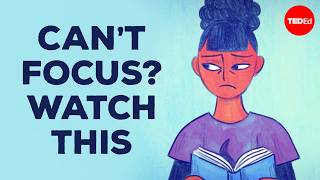
Explore 4 strategies to build a better attention span, manage distractions, and help your brain stay focused on its tasks. In today’s world, our attention is being pulled in more directions than ever before. This can make finding focus— for work, school, and even the things we love— feel almost impossible. So, how can you improve and better protect your attention span?

6:30

Why is it so easy for birds to spread illness? - Benjamin Anderson

488K views · 1mo ago · 6:30

Guest: Benjamin Anderson

Dig into the science of avian influenza to find out what makes the H5N1 virus so dangerous, and its potential to jump to humans. While avian influenza used to infect mostly birds, in the past few years, it’s been found in over 70 mammal species, including cats, dairy cows, foxes, seals, and bears. Each new mammalian infection gives the virus more chances to drift or shift, spill over into humans, and ignite a pandemic.

9:29

How to explain something complicated

662K views · 1mo ago · 9:29

Episode 8: Explore what building blocks you need to best explain complex ideas in ways your audience will understand and engage with. This is episode 8 of the animated series, “Public Speaking 101.” Ideas change everything — and since language lets us share our ideas, learning how to use it well gives speakers the power to inspire people and even change how they think.

📺 Mentioned TV series: Public Speaking 101

5:54

Why do some people have a better sense of direction than others? - Oliver Baumann

1.6M views · 2mo ago · 5:54

Guest: Oliver Baumann

Dig into the neuroscience behind our sense of direction and find out why some people are better at navigating than others. Lesson by Oliver Baumann, directed by Anton Bogaty. This video was made possible in collaboration with Nobel Prize Outreach, and with support from the Sloan Foundation Learn more about how TED-Ed partnerships work

5:40

What are tariffs, and how do they work?

789K views · 2mo ago · 5:40

Explore how tariffs work and dig into how their enactment can set off an economic chain reaction that impacts global trade. In 1930, in hopes of supporting farms and manufacturing, President Hoover made a bold decision: he approved a sweeping 20% tax on all imported agricultural and industrial goods. But the plan completely backfired, leading exports to fall and global trade to decline. And it wouldn't be the last time a world leader was shocked by a tariff’s consequences.

5:06

4 ways to tell a great story

597K views · 2mo ago · 5:06

Episode 7: Discover the 4 components of what makes a great storyteller, and the important role that stories play in audience connection. This is episode 7 of the animated series, “Public Speaking 101.” Ideas change everything — and since language lets us share our ideas, learning how to use it well gives speakers the power to inspire people and even change how they think.

📺 Mentioned TV series: Public Speaking 101

5:40

Plato’s infamous Ship of State thought experiment - Michael Vazquez

574K views · 2mo ago · 5:40

Guest: Michael Vazquez

Dig into Plato’s infamous Ship of State thought experiment, which explores how democratic societies handle leadership and power. Imagine a ship struggling in an endless storm. Its captain, though strong and commanding, is a terrible navigator. Neither he nor his crew have been trained to sail, yet they tirelessly vie for control through bribery, flattery, and mutiny, and ignore those with real navigation knowledge. This dysfunctional vessel is Plato's Ship of State.

🎵 Mentioned music: Track on soundcloud.com

4:40

The Greek myth of Apollo's curse - Iseult Gillespie

260K views · 2mo ago · 4:40

Guest: Iseult Gillespie

Dig into the Greek tragedy of Cassandra, who received the gift of prophecy but was cursed by Apollo to never be believed. As a young woman, Cassandra of Troy had been pursued by the god Apollo, who offered her the gift of prophecy. But when she withdrew from his advances, he twisted his gift into a maddening hex: from that day on, Cassandra would be able to precisely see and describe the future— but her prophecies would never be believed.

Showing the 24 most recent videos. Everything plays right here on The Pod Atlas.

Have thoughts about TED-Ed? Share them with other learners.

Write a review

More Science educational channels

← Back to all educational channels