Fermilab

Fermilab

@fermilab · 831K subscribers · 533 videos · English

Fermi National Accelerator Laboratory is America's particle physics and accelerator lab. Founded as the National Accelerator Laboratory in 1967, it was renamed after physicist Enrico Fermi in 1974. Since its inception, Fermilab has been a world leader in particle physics, with discoveries including the bottom quark, top quark and tau neutrino, three of the elementary particles that make up our universe. Fermilab is home to approximately 1,700 scientists, engineers, technicians and support staff, and hosts about 2,500 visiting scientists from around the world. The laboratory is managed by the F

What learners say

Watched Fermilab? Tell other learners what you think below, or read the discussion around the channel.

Click to see the discussion

Videos

1:52

SBND: Chasing neutrinos for DUNE

5K views · 1d ago · 1:52

The keys to some of the universe’s biggest mysteries may be hidden in one of its most elusive particles Trillions of neutrinos are streaming harmlessly through you every second. Understanding these so-called ghost particles could help scientists solve some of the biggest questions in physics, from why matter exists to how black holes form after a star dies.

1:31

Journey of the steel beams for DUNE

15K views · 7d ago · 1:31

Millions of pounds of steel are heading underground for the Deep Underground Neutrino Experiment! ⏬ Together with 1,500+ collaborators from 35+ countries, we are laying the groundwork to unlock the secrets of neutrinos and the origins of our universe.

3:36

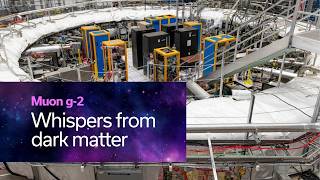
Muon g-2 | Whispers from dark matter

45K views · 13d ago · 3:36

Happy #DarkMatterDay! There's more to the cosmos than meets the eye. In fact, there’s a BIG part of the universe that we don’t know much about. The Muon g-2 experiment at Fermilab has achieved the most precise measurements of muon behavior in a magnetic field ever recorded, creating a new opportunity to search for dark matter. Such precision makes it possible to listen for extremely faint signals from interactions between dark matter and muons.

1:37

Microelectronics | Tiny tech, giant discoveries

6K views · 18d ago · 1:37

For 40 years, Fermilab has been at the forefront of developing cutting-edge microelectronics. These aren't just any chips – they're engineered to process the faintest signals in extreme environments, from high-energy bombardment to temperatures colder than outer space.

1:36

Magnet technology | Advancing fusion research

10K views · 23d ago · 1:36

Today, superconducting magnets are essential to both high energy physics and fusion energy research. Certain materials, when cooled to extreme temperatures, lose all electrical resistance and can carry extraordinary currents, making them capable of generating magnetic fields far beyond what conventional electromagnets can achieve.

12:54

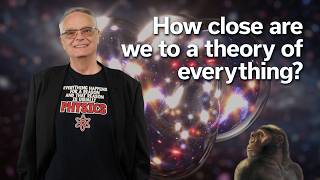
How long until we find a theory of everything | Don Lincoln

276K views · 1mo ago · 12:54

Guest: Don Lincoln

Physicists have spent generations chasing a theory that could unify the laws of the universe. So much of the cosmos stays mysterious because the energies where new physics might appear lie impossibly far beyond our reach. Join Fermilab's Don Lincoln to discover how this enormous scale gap shapes the boundaries of scientific knowledge and why the journey toward a theory of everything continues to inspire scientists.

▶️ Mentioned videos: Video on youtube.com

1:23

Why we need quantum computers

9K views · 1mo ago · 1:23

A classical computer solves problems one step at a time. But a quantum computer can explore multiple possibilities simultaneously. In the future, quantum computers could solve advanced physics questions and bring breakthroughs in medicine and national security.

1:36

What is a quantum sensor?

18K views · 1mo ago · 1:36

Unlocking the secrets of the universe with quantum science Quantum sensors are used to explore some of the most fundamental questions in physics including hunting for dark matter. Fermilab's QUIET lab sits 100 meters underground to allow scientists to study the performance of qubits protected from cosmic radiation.

4:52

What is a quantum sensor? | Quantum science at Fermilab

38K views · 1mo ago · 4:52

Join Fermilab scientists Rakshya Khatiwada and Daniel Baxter as they break down what quantum sensors are, how they work, and why they can make measurements traditional sensors can’t. They also explain how Fermilab’s QUIET lab, located 100 meters underground, helps researchers protect these sensitive devices from environmental noise and develop new tools for quantum computing and the search for dark matter.

1:37

Quantum Science | Accelerator labs are driving the quantum era

10K views · 2mo ago · 1:37

Guest: Quantum Science

Accelerator labs are unlocking the quantum future. The same technologies used to study the smallest particles in the universe are now powering breakthroughs in quantum science. Breakthroughs in quantum physics could lead to insights into dark matter and advance innovation in national security, medicine and beyond.

8:17

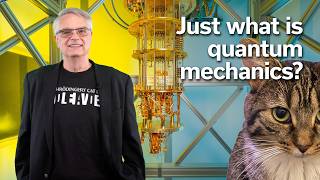
Just what is quantum mechanics? | Don Lincoln

139K views · 2mo ago · 8:17

Guest: Don Lincoln

It seems like the word “quantum” is everywhere these days, from quantum computers to quantum cryptography. But just what does “quantum” mean? In this video, Dr. Don shares the various meanings of the word and tells a bit about the types of quantum research being done at Fermilab.

1:48

Genesis Mission | AI for particle accelerators

5K views · 2mo ago · 1:48

Guest: Genesis Mission

Timing is everything inside a particle accelerator. ⏱ A fraction of a second can be the difference between keeping the particles racing through the accelerator or falling out of tune. Researchers from Fermilab and partners from other national laboratories, universities and industry will use AI to protect that rhythm. Their project, selected for the Department of Energy's Genesis Mission, is poised to reshape how accelerators are controlled, optimized and operated.

6:34

Can neutrinos prove the Earth is round? | Even Bananas

15K views · 3mo ago · 6:34

Guest: Even Bananas

Neutrinos can pass straight through the Earth, changing as they go. Can we use that to prove the world is round? Join #EvenBananas host Kirsty Duffy and atmospheric neutrino expert Daniel Barrow as they turn our favorite tiny particles into high-speed seismologists.

1:27

PIP-II | Installing the first gear of the new linac

10K views · 3mo ago · 1:27

From past breakthroughs to future frontiers! 70 years after the first neutrino detection, we're laying the groundwork for tomorrow's cosmic discoveries. Recently, the first piece of our new linear accelerator’s beamline was moved into the accelerator tunnel! This radio-frequency quadrupole — designed and built by our partners at Berkeley Lab — will serve as the "first gear" of the upgraded Fermilab accelerator complex.

1:38

#Neutrino70 | Chasing cosmic relics

7K views · 4mo ago · 1:38

It’s one of humanity’s oldest questions, and the answer might be written in ghostly particles called neutrinos. These "cosmic relics" have been bouncing around the universe since the dawn of time, carrying secrets from the hearts of supernovae and the birth of the cosmos.

1:25

Genesis Mission | Advancing science through AI

3K views · 6mo ago · 1:25

Guest: Genesis Mission

We're proud to be a part of the #GenesisMission as it will help reimagine the scientific process through AI to accelerate scientific discovery. In coordination with the U.S. Department of Energy mission to advance the Genesis Mission, Fermilab aims to transform discovery science by advancing quantum-computing paradigms, which will deepen our understanding of the laws of nature and the cosmos.

5:23

Muon g-2 wins Breakthrough Prize in Fundamental Physics

24K views · 6mo ago · 5:23

The Muon g-2 experiment at Fermilab received the 2026 Breakthrough Prize in Fundamental Physics for its precision measurement of the muon. The award recognized three generations of the Muon g-2 experiment, which provided the world’s most precise measurement to date of the muon. The experiment began at CERN in the 1970s, shifted to Brookhaven National Laboratory in the 1990s and concluded at Fermilab with final publication in 2025.

▶️ Mentioned videos: Muon g-2 final result · Muon g-2 second result 2023 video · Muon g-2 first result 2021 video

1:25

Quantum science | What is a dilution fridge?

13K views · 7mo ago · 1:25

Ever wondered how scientists achieve ultra-low temperatures for quantum research? Join Fermilab experts Grzegorz Tatkowski, Chris James, and Daniel Bafia as they as they explore an essential tool for quantum breakthroughs: dilution refrigerators.

1:41

Quantum science | Searching for dark matter

6K views · 7mo ago · 1:41

Fermilab is bringing its accelerator expertise into the quantum era. The same superconducting tech that pushes particles to incredible speeds is now helping us build quantum systems that can detect unbelievably tiny signals in the quantum world.

1:32

Testing chips for the DUNE detector

7K views · 7mo ago · 1:32

We're keeping our eyes peeled for elusive particles. In recognition of National Robotics Week, we're highlighting some of the technology enabling next‐generation neutrino science. At Fermilab, teams are testing custom computer chips that will eventually read out signals from the massive DUNE far detector.

3:06

What is a dilution fridge? | Quantum science at Fermilab

15K views · 7mo ago · 3:06

Join cryoengineers Greg Tatkowski and Chris James, along with physicist Daniel Bafia, as they unravel the mysteries of dilution refrigerators— an essential tool for achieving ultra-low temperatures critical to quantum research. Learn how these remarkable devices work and why they are fundamental to advancing quantum technology.

1:43

CMS Experiment | Scintillator tiles for the HiLumi LHC era

18K views · 7mo ago · 1:43

Guest: CMS Experiment

The LHC is preparing to enter a new era. CERN's High-Luminosity LHC upgrade will increase the number of particle collisions by a factor of 10, opening the door to unprecedented precision in the search for new physics. The CMS detector is leveling up right alongside it — and Fermilab is proud to be a part of it.

1:29

Fermilab Tracked 2025

8K views · 10mo ago · 1:29

We can't help but reminisce about the achievements and moments that made 2025 memorable at Fermilab! Join us in celebrating these incredible highlights. Learn more at

2:43

2025 Fermilab Highlights

9K views · 10mo ago · 2:43

In 2025, Fermilab's dedicated scientists, engineers, technicians and operations staff came together to drive discoveries, advance American innovation and prepare the lab for a bright future as the neutrino capital of the world.

1:39

MicroBooNE | Studying the elusive neutrino

14K views · 11mo ago · 1:39

Ten years ago, the first neutrinos interacted in the liquid argon of the MicroBooNE particle detector at Fermilab, marking a turning point for the lab’s neutrino research program. MicroBooNE is now part of a vibrant program of liquid-argon-based neutrino experiments, including the Short-Baseline Near Detector, ICARUS and the Deep Underground Neutrino Experiment .

7:08

ICARUS: The search for new physics

22K views · 12mo ago · 7:08

This year, the ICARUS collaboration is celebrating five continuous years of data collection! Step inside this massive detector at Fermilab, where scientists are studying one of the universe’s most mysterious particles: the neutrino. Learn how the ICARUS experiment contributes to the Short-Baseline Neutrino Program’s search for physics beyond the Standard Model and how its findings will help shape the future of experiments like the Deep Underground Neutrino Experiment.

2:56

DUNE: Seeing the invisible

17K views · 1y ago · 2:56

At the dawn of the universe, matter and antimatter were created in equal amounts. If nature had played fair, they should have annihilated each other completely, leaving nothing behind—but instead, matter prevailed, and we are here to tell the tale.

1:36

NSF-DOE Vera C. Rubin Observatory | Data management

16K views · 1y ago · 1:36

The @RubinObservatory will gather 20 terabytes of data every night. How will scientists manage that amount of data to map out the entire night’s sky? Get ready for your first preview of how Rubin will #CaptureTheCosmos in its decade-long survey! : June 23, 2025 at 10am CT

1:08:32

Final Muon g-2 Measurement at Fermilab

15K views · 1y ago · 1:08:32

The 2025 result from the Muon g-2 experiment at Fermilab was unveiled and discussed in a scientific seminar on June 3, 2025. The experimental result was presented by Simon Corrodi, collaborator on the Muon g-2 experiment.

Showing the 39 most recent videos. Everything plays right here on The Pod Atlas.

Have thoughts about Fermilab? Share them with other learners.

Write a review

More Science educational channels

← Back to all educational channels