World Science Festival

World Science Festival

@worldsciencefestival · 1.4M subscribers · 1,472 videos · English

Watch long and short-form videos on nearly every science-related topic including physics, biology, the brain, robotics, medicine, space, engineering, and the Earth. We gather great minds in science and the arts to produce live and digital content that allows a broad general audience to engage with scientific discoveries. Through discussions, debates, original films, lectures, and intimate salons, the World Science Festival takes science out of the laboratory and out into world. The World Science Festival is a production of the World Science Foundation, a 501c3 non-profit headquartered in New Y

What learners say

Watched World Science Festival? Tell other learners what you think below, or read the discussion around the channel.

Click to see the discussion

Videos

1:24:18

Are There Problems Beyond the Reach of AI | World Science Festival

314K views · 13d ago · 1:24:18

Has artificial intelligence already surpassed human mathematicians? And if it has, what is left for humans to do? Scott Aaronson, director of the Quantum Information Center at the University of Texas at Austin, joins Brian Greene to examine what happens to mathematics now that AI systems are solving problems that stumped humans for decades if not longer.

Topics: Brian Greene and Scott Aaronson · The First Moment That Caught Aaronson's Attention: GPT-3 and Scale · The Erdős Unit Distance Problem · Why AI Never Gets Tired or Discouraged · The Mathocalypse · What Is Lean and Why Does a Lean Certificate Matter?

9:56

AI and the Hard Problem of Consciousness | World Science Festival

222K views · 15d ago · 9:56

Can a machine be conscious? Brian Greene explains how AI raises one of the oldest puzzles in science and philosophy. Your brain holds something like 100 trillion trillion atoms organized into billions of neurons, and every one of those particles obeys the same laws of physics as particles anywhere else. Yet nothing in those equations speaks to an inner world of awareness.

1:02:11

The Gamble That's Revolutionizing Astronomy | World Science Festival

213K views · 27d ago · 1:02:11

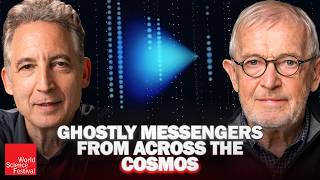
Building a telescope more than a kilometer under the ice in Antarctica was a gamble. But Francis Halzen had the audacity to try. Decades later, his visionary work has opened a new era of neutrino astronomy, and won the Belgian-born physicist the 2026 Nobel Prize in Physics.

Topics: Welcome: Brian Greene and Francis Halzen · A History of Nobel Prizes in Neutrino Physics · When Did Halzen Get the Neutrino Bug? · The Askaryan Idea: Detecting Neutrinos in Ice by Radio Pulse · From Theory to Amanda and IceCube · A New Kind of Astronomy: Looking at the Sky With Neutrinos

9:55

Will AI Destroy Mathematics? | World Science Festival

339K views · 29d ago · 9:55

What might happen to mathematics, and to mathematicians, when artificial intelligence can solve in hours or days what humans have struggled with for decades or longer. Brian Greene reflects on OpenAI’s release of more than 700 papers, claiming progress on roughly 370 unsolved mathematical problems, and asks the question: Going forward, what will be the role of the human mathematician? Will AI’s approach contain genuine insights or merely answers without understanding?

5:06

The 2026 Nobel Prize in Physics Explained | World Science Festival

498K views · 1mo ago · 5:06

Professor Francis Halzen has won the 2026 Nobel Prize in Physics. Brian Greene explains the science behind it, and why detecting neutrinos from deep space opens a genuinely new way of observing the universe. Neutrinos were proposed in the 1930s to account for energy that seemed to vanish during particle interactions and were confirmed experimentally two decades later.

1:30:00

AI Just Changed Mathematics Forever | World Science Festival

604K views · 1mo ago · 1:30:00

Guest: Tristan Buckmaster

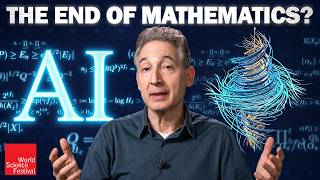
Has a machine just solved one of the most famous open problems in mathematics? Brian Greene speaks with Tristan Buckmaster, professor of mathematics at NYU's Courant Institute, about the Navier-Stokes equations, the Clay Institute's million dollar Millennium Prize, and the role artificial intelligence played in the progress toward an answer.

Topics: Can AI Really Be Creative? · How AI Is Changing Mathematics · Understanding the Navier-Stokes Equations · Why Fluid Equations Can Break Down · The Millennium Prize Problem · The History of the Navier-Stokes Problem

▶️ Mentioned videos: Video on youtube.com

53:12

How Does Your Brain Know Where You Are? | World Science Festival

181K views · 2mo ago · 53:12

Guest: Edvard Moser

How does your brain know where you are, even in the dark? Brian Greene speaks with Edvard Moser, Nobel laureate and director of the Kavli Institute for Systems Neuroscience, about the discovery of grid cells, the brain's internal coordinate system for space.

Topics: Welcome, Edvard Moser · Place Cells: The Discovery That Started It All · Can a Rat Navigate in Complete Darkness? · An Internal Map the Brain Is Born With · Head Direction Cells: The Brain's Built-In Compass · Grid Cells: What They Are and How Moser Found Them

▶️ Mentioned videos: Video on youtube.com

53:14

Are There Limits To What Physics Can Explain? | World Science Festival

137K views · 2mo ago · 53:14

Guest: Marcelo Gleiser

Do we invent the laws of physics? Why are we driven to find explanations? Brian Greene sits down with Marcelo Gleiser, theoretical physicist at Dartmouth College and Templeton Prize winner, for a conversation that moves between physics, philosophy, and the psychology of mortality.

Topics: Could We Ever Know We've Reached the Bottom of Reality? · Where Does the Urge to Understand Everything Come From? · Awe and Wonder vs. Fear of Death: Are They the Same? · How Mortality Shaped Gleiser's Work · Are We Matter Thinking About Itself? · How Did Life Happen Without a Conductor?

▶️ Mentioned videos: Are There Limits To What Physics Can Explain? World Science Festival

1:27:34

What's Behind Everything You Do? | World Science Festival

68K views · 3mo ago · 1:27:34

Guest: Brian Greene

The fear of death quietly shapes almost everything we do. At least that was the thesis Ernest Becker put forward in his Pulitzer Prize winning book, The Denial of Death. But how can we tell if it's true? That's the question social psychologist Sheldon Solomon and his collaborators have pursued for more than four decades the subject of this conversation with Brian Greene.

Topics: What Death Does to Human Decisions · How Brian Greene Discovered Ernest Becker · What Makes Humans Different From Every Other Animal · Kierkegaard, Self Awareness, and the Two Emotions That Define Us · Cultural Worldviews as Armor Against Death · Why People Resist the Idea That Death Motivates Them

▶️ Mentioned videos: Video on youtube.com

1:48:15

Exploring the Deep Mysteries of Physics | World Science Festival

521K views · 3mo ago · 1:48:15

Are the laws of physics real, or are they human inventions? This is one of many questions Brian Greene and Sean Carroll explore at the very edge of understanding, where physics meets philosophy. Carroll, a theoretical physicist at Johns Hopkins University, host of the Mindscape podcast, and a bestselling author, joins Greene for a wide-ranging conversation regarding the workings of the world at its deepest level.

Topics: Why Are There Patterns in the Universe at All? · Is Mathematics Invented or Discovered? · Why the Philosophy of Math Actually Matters to Working Physicists · Are the Laws of Physics Real, or Just Human Descriptions? · Can You Ever Demand a Further Explanation? · Are We Close to the Limits of Human Understanding

▶️ Mentioned videos: Video on youtube.com

1:49:09

Ask Brian Greene LIVE Q&A | World Science Festival

134K views · 4mo ago · 1:49:09

Bring your curiosity and your questions for a live Q+A with Brian Greene. This program is part of the Rethinking Reality series, supported by the John Templeton Foundation. Host: Brian Greene ABOUT WORLD SCIENCE FESTIVAL The World Science Festival (WSF) is a multimedia organization bringing the most transformative ideas in science to global audiences.

1:24:00

Does Einstein Need an Upgrade? | World Science Festival

117K views · 4mo ago · 1:24:00

Guest: Claudia de Rham

Did Einstein have any choice in formulating the general theory of relativity? Brian Greene speaks with Claudia de Rham, professor of theoretical physics at Imperial College London and a pioneer of massive gravity, a framework that asks what happens if the graviton, the particle thought to transmit the gravitational force, carries a tiny but nonzero mass.

Topics: Did Einstein Have Any Choice in Creating His Theory? · Why Gravity Captivates Us From the Start · How Einstein Reimagined Gravity as the Geometry of Spacetime · Thinking of Gravity Like Electromagnetism · Is Gravity Quantum Mechanical? · What Is the Speed of Light, Really?

▶️ Mentioned videos: Video on youtube.com

1:07:28

Can We Test Quantum Gravity? | World Science Festival

96K views · 4mo ago · 1:07:28

Guest: Vlatko Vedral

What if a groundbreaking experiment could finally reveal whether gravity is a quantum force? Brian Greene sits down with Vlatko Vedral, Professor of Quantum Information Science at the University of Oxford, to explore one of the deepest questions in modern physics: Is gravity fundamentally quantum, or does it remain classical even at the most fundamental level?

Topics: Welcome to the Conversation: Brian Greene and Vlatko Vedral · From Einstein's Entanglement Debate to Quantum Computers Today · A Historical Parallel: Skepticism Before the Breakthrough · Freeman Dyson's Heresy: What If Gravity Isn't Quantum at All? · The Strongest Argument for Quantizing Gravity · Did Niels Bohr Get It Wrong About the Classical World?

▶️ Mentioned videos: Video on youtube.com

Showing the 35 most recent videos. Everything plays right here on The Pod Atlas.

Have thoughts about World Science Festival? Share them with other learners.

Write a review

More Science educational channels

← Back to all educational channels