The Visser Podcast | Dr. Richard Visser

The Visser Podcast | Dr. Richard Visser

@thevisserpodcast · 16K subscribers · 247 videos · English

Welcome to The Visser Podcast—where public health governance meets modern longevity science. Hosted by Dr. Richard W. M. Visser (DC, PhD, Longevity Strategis…

Episodes

25:22

Strength is the New Vital Sign | NEW Rules for Training After 40

685 views · 3d ago · 25:22

For decades, we were told that walking and general cardio form the foundation of healthy aging, but that advice is incomplete. In 2026, the American College of Sports Medicine (ACSM) published its first major update on resistance training since 2009, analyzing 137 reviews and over 30,000 people. In this episode, Dr. Richard Visser breaks down why muscle mass, strength, and power are the ultimate biological retirement accounts. Dr.

Topics: Why walking and cardio alone are incomplete for aging · The 2026 ACSM resistance training update and key findings · Measuring the wrong things: Why doctors ignore physical reserve · The engine, the force, and the speed: Mass vs. Strength vs. Power · What the ACSM data reveals about consistency over complex routines · Programming for maximum strength: Loads, reps, and workout ordering

17:05

GLP-1s May Be Doing Something Much Bigger Than Weight Loss

4.8K views · 2w ago · 17:05

Are we thinking about GLP-1 medications completely wrong? While widely used for weight loss, a September 2026 Nature study showed that semaglutide extended median lifespan in older mice by 12%, while human trial data revealed favorable improvements across multiple epigenetic aging clocks. In this episode, Dr. Richard Visser examines whether GLP-1 receptor activation directly slows aging or simply reverses metabolic stress. Dr.

20:16

GLP-1 MUSCLE LOSS: HOW TO LOSE FAT WITHOUT LOSING MUSCLE

989 views · 3w ago · 20:16

When taking GLP-1 medications like Wegovy, Zepbound, or Ozempic, rapid weight loss is celebrated, but losing 20 kilograms does not mean you lost 20 kilograms of fat. Without a muscle-preserving strategy, up to 39% of total weight loss can come from lean tissue, sacrificing the metabolic muscle needed for longevity. In this episode, Dr.

Topics: Why losing 20kg on a GLP-1 is not always a victory · The 2026 meta-analysis: Quantifying lean mass loss on GLP-1s · Why muscle is metabolic tissue and your biological insurance · The danger of severe appetite suppression and protein starvation · Rule 1: Protein-first nutrition (1.6 to 2.0g/kg) · Rule 2: Progressive resistance training (Why walking isn't enough)

19:01

Rapamycin: The Longevity Drug Your Doctor Wont Prescibe You

608 views · 1mo ago · 19:01

Rapamycin can extend lifespan in animal models and targets one of the most critical pathways in aging, yet most doctors will refuse to prescribe it for longevity. In this episode, Dr. Richard Visser examines why rapamycin sits right on the dividing line between theoretical longevity science and proven human medicine. Dr.

Topics: The rapamycin paradox: Why doctors say no · Origin on Easter Island and the mTOR growth switch · Shifting from constant growth to cellular maintenance and autophagy · The mouse data: Why late-life treatment changed longevity research · Human trial evidence and the Pearl trial results · Why your doctor won't prescribe rapamycin off-label

19:33

GlyNAC 2026 UPDATE! Promising longevity tool or just supplement hype?

6.9K views · 1mo ago · 19:33

GlyNAC (Glycine and N-Acetylcysteine) is suddenly everywhere in the longevity space, with claims of better mitochondria, muscle preservation, enhanced cognition, and extended lifespan. But what actually changed following the May 2026 evidence review? In this episode, Dr. Richard Visser breaks down the biology of glutathione synthesis, examines the real data from small human trials and larger dose-response studies, and separates mouse model hype from human reality.

Topics: GlyNAC is everywhere: Sorting hype from reality · What is GlyNAC? Providing raw materials for glutathione · Why aging and oxidative stress travel together · Human trial data: Mitochondrial function, strength, and gait speed · The discontinuation study: What happens when you stop taking GlyNAC · The 114-person dose trial: Why baseline deficiency matters

33:58

Which one does your body actually need?! HGH VS Peptides

2.6K views · 1mo ago · 33:58

When exploring longevity, muscle preservation, and body composition over 40, the conversation invariably turns to growth hormone and peptides. But the internet is split: one side warns against human growth hormone in favor of natural peptides, while the other dismisses peptides as weak. In this episode, Dr. Richard Visser cuts through the false dichotomies to provide a comprehensive decision framework.

Topics: The HGH vs. peptides debate: Why both sides are too simplistic · Core physiology: How the hypothalamus, pituitary, and liver produce IGF-1 · Age-related decline vs. true adult growth hormone deficiency (GHD) · Compound breakdown: Sermorelin, Tesamorelin, Ipamorelin, and CJC-1295 · The data on CJC-1295 with DAC: Understanding basal elevation and pulses · The IGF-1 diagnostic trap: Why a single blood test isn't enough

12:09

The New Era of Cancer Treatment: Why the Immune System Changes Everything

757 views · 2mo ago · 12:09

For decades, cancer care focused almost entirely on destroying tumors through surgery, radiation, and chemotherapy. Today, oncology is undergoing a quiet revolution centered around a new question: How can we train the immune system to recognize and control cancer's unique biology?

Topics: The shift from tumor destruction to immune recognition · Why cancer is thousands of different diseases · Neoantigens: The molecular fingerprints on cancer cells · Checkpoint Inhibitors: How cancer hijacks the immune brakes · Tumor Lysate & Dendritic Cells: Teaching T-cells what to look for · Personalized mRNA cancer vaccines

12:48

Why Most Men Fail On TRT | The Biggest Testosterone Mistakes Explained!

616 views · 2mo ago · 12:48

Why do so many men on testosterone replacement therapy (TRT) still suffer from fatigue, mood swings, brain fog, water retention, and low libido? The biggest problems seen in men on TRT aren't caused by testosterone itself—they are caused by improper administration and poor lifestyle management.

Topics: The #1 mistake on TRT: Once-weekly injections · Every-other-day (EOD) dosing vs. weekly spikes · Why estrogen is vital for male libido and brain health · What actually drives high estrogen (Body fat, alcohol, insulin) · The dangers of overusing Aromatase Inhibitors (AIs) · Why some men still feel terrible on TRT

8:38

Low Testosterone After 40 | Signs, Symptoms, When You ACTUALLY NEED TRT

2.1K views · 2mo ago · 8:38

Millions of men over 40 struggle with fatigue, low libido, weight gain, brain fog, poor recovery, depression, and loss of muscle without realizing that low testosterone may be part of the picture. In this episode, Dr. Richard Visser cuts through the noise in men's health to debunk the two biggest myths surrounding testosterone replacement therapy: that low T is an inevitable part of getting older, and that every tired man needs an injection.

Topics: Two biggest myths in men's health · Why testosterone matters: Symptoms beyond libido · Root causes: Why testosterone actually fails · How to optimize testosterone naturally · Essential blood tests before starting TRT · Dr. Visser’s personal clinical perspective

22:21

Follistatin Gene Therapy: The Gene That Doubles Muscle

3.1K views · 2mo ago · 22:21

Guest: Follistatin Gene Therapy

What if you could turn off the genetic brakes that limit muscle growth? Researchers and biohackers are investigating Follistatin gene therapy—a treatment designed to suppress Myostatin, the protein that controls muscle size. While animal models display extraordinary "double muscling" phenotypes and early human trials offer hope for severe muscular diseases, unregulated gene therapy poses unique risks.

Topics: The double muscling phenotype: How Myostatin works · The reversibility problem with gene therapy · Why muscle is a vital metabolic organ, not cosmetic tissue · Myostatin: The evolutionary brake system · Follistatin isoforms: FS288, FS315, and FS344 explained · Traditional drugs vs. AAV viral gene vectors

27:15

New Lp(a) Drugs Could Change Heart Disease Forever

461 views · 2mo ago · 27:15

Elevated Lipoprotein(a)—or Lp(a)—is one of the most significant inherited cardiovascular risk factors in modern medicine, affecting approximately 1 in 5 people worldwide. Yet, because Lp(a) is not included on standard cholesterol panels, millions of people with normal LDL cholesterol, healthy diets, and active lifestyles carry a massive hidden risk for premature heart attack, stroke, and aortic valve stenosis without ever knowing it.

5:16

Bimagrumab Explained | The Drug That May Solve GLP-1 Muscle Loss

1.4K views · 3mo ago · 5:16

Can you lose fat while preserving muscle? Bimagrumab is one of the most exciting investigational therapies in obesity medicine. In this episode Dr. Richard W.M. Visser explains how bimagrumab works, why muscle preservation matters, the BELIEVE trial, and why body composition may be more important than body weight alone.

6:57

They Just Edited Out Heart Disease | PCSK9 Gene Editing Explained

537 views · 3mo ago · 6:57

Scientists are attempting something once considered impossible: permanently lowering LDL cholesterol by editing the PCSK9 gene with a single infusion. In this episode Dr. Richard W.M. Visser explains the latest VERVE-102 Phase 1 clinical trial, how base editing works, why people born with PCSK9 mutations naturally have lifelong protection against heart disease, and what this breakthrough could mean for the future of cardiovascular medicine.

6:17

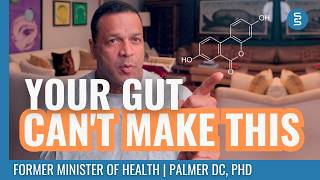
Urolithin A | The Gut Metabolite That Triggers Mitophagy — Cellular Cleanup Most People Can't Make

844 views · 3mo ago · 6:17

What if the single biggest driver of human aging isn't systemic inflammation or declining hormones, but the literal accumulation of cellular trash inside your body's energy-producing organelles? Your mitochondria are constantly damaged by the standard wear-and-tear of energy production. When they break, they stop making power (ATP) and start creating oxidative stress.

Topics: The Gut Microbiome Barrier: Why you can't eat enough pomegranate · Defining Mitophagy: Your body's mitochondrial quality control system · Quality vs. Quantity: Why removing damaged mitochondria is non-negotiable · The Comparison: Urolithin A vs. NAD+ (NMN) metabolism · Stacking Protocols: How Urolithin A synergizes with MOTS-c · The Trifecta: The clinical differences between SS-31 and Urolithin A

Showing the 15 most recent episodes. Everything plays right here on Pod Atlas.

Have thoughts about The Visser Podcast | Dr. Richard Visser? Share them with other listeners.

Discuss this podcast

More Health & Medicine podcasts

← Back to all podcasts